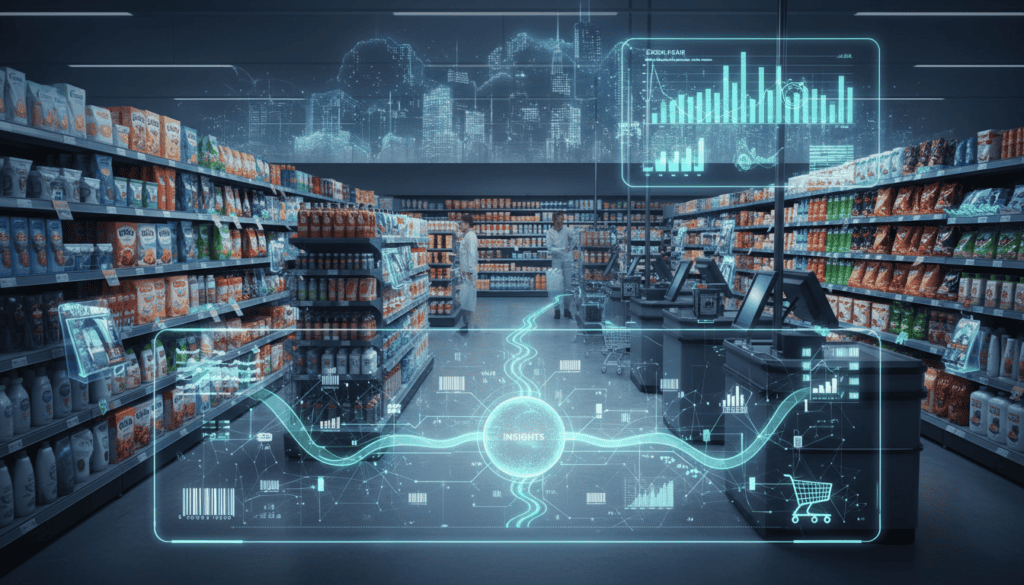
Every barcode scan at checkout generates a data point worth its weight in gold. For CPG brands, these retail scan insights reveal not just what sold, but when, where, and how consumer behavior shifts in real-time. Point-of-sale data transforms guesswork into precision marketing strategies that actually move products off shelves.

Understanding CPG Point-of-Sale Data Fundamentals
Point-of-sale (POS) data captures every transaction at the moment of purchase. For consumer packaged goods companies, this information provides an unfiltered view of product performance across different retailers, regions, and time periods.
Here’s what makes POS data so valuable: it eliminates the lag time between consumer action and brand insight. Traditional market research might take weeks or months to reveal trends, but scan data shows you what happened yesterday, last week, or even in real-time depending on your data partnerships.
Key Components of Retail Scan Information
- Product identification: UPC codes, SKU numbers, and product descriptions
- Sales volume: Units sold and dollar amounts
- Timing data: Date, time, and seasonal patterns
- Location intelligence: Store-level, regional, and chain performance
- Price information: Regular pricing, promotions, and discount tracking
- Category context: Performance relative to competitors and category trends
Strategic Applications for Business Growth
Most businesses miss this: POS data isn’t just about tracking sales—it’s about predicting and influencing future consumer behavior. Smart CPG brands use this information to make decisions that impact everything from inventory management to marketing spend allocation.
Inventory and Supply Chain Optimization
Scan data reveals demand patterns that aren’t always obvious from sales reports alone. You might discover that a product sells consistently in urban markets but spikes dramatically in suburban locations during specific seasons. This insight helps you:
- Optimize stock levels by location and season
- Reduce out-of-stock situations that cost sales
- Minimize overstock and associated carrying costs
- Plan production schedules based on actual demand cycles
The reality is that many CPG brands still rely on historical averages rather than real-time demand signals. Companies that switch to data-driven inventory management typically see 10-15% improvements in stock efficiency within the first year.
Promotional Strategy and Pricing Intelligence
Point-of-sale data shows exactly how consumers respond to different pricing strategies and promotional offers. You can track which discounts drive meaningful volume increases versus those that simply erode margin without generating incremental sales.
Here’s what works: analyzing the relationship between promotion depth, duration, and lift across different product categories and retail channels. This analysis reveals optimal promotional strategies that maximize both volume and profitability.
Competitive Intelligence and Market Share Analysis
Retail scan data provides unprecedented visibility into competitive dynamics. You can track not just your own performance, but monitor how competitors’ product launches, pricing changes, and promotional activities impact market share.
Category Management Insights
Understanding category-wide trends helps position your products more effectively. POS data reveals:
- Growth segments within your category
- Seasonal demand fluctuations across the entire market
- Price elasticity patterns for different product types
- Consumer switching behavior between brands
- Impact of new product introductions on existing items
This might surprise you: many successful product repositioning strategies start with insights gleaned from category-wide scan data analysis rather than traditional focus groups or surveys.
Regional and Channel Performance Variations
National averages often hide significant regional variations in product performance. POS data reveals these geographic patterns, enabling more targeted marketing and distribution strategies.
For example, a snack food brand might discover that their spicy flavors perform exceptionally well in southwestern markets but lag in the northeast. This insight can drive both product mix decisions and regional marketing campaigns.

Marketing Campaign Measurement and Optimization
Point-of-sale data provides the most direct measurement of marketing campaign effectiveness. Unlike brand awareness surveys or digital engagement metrics, scan data shows whether your marketing efforts actually drove incremental purchases.
Media Mix Modeling with POS Data
Combining scan data with media spend information creates powerful attribution models. You can determine which marketing channels drive the most cost-effective sales lift and optimize budget allocation accordingly.
Key metrics to track include:
- Sales lift during campaign periods versus baseline performance
- Geographic correlation between media weight and sales increases
- Lag time between campaign launch and sales response
- Incremental volume versus baseline cannibalization
Data Integration and Technology Considerations
Here’s the thing: having access to POS data is only valuable if you can integrate it effectively with your existing business systems and decision-making processes.
Data Sources and Partnerships
Most CPG companies access retail scan data through partnerships with data providers like Nielsen, IRI, or direct relationships with major retailers. Each source has different strengths:
- Syndicated data providers: Broad market coverage and standardized reporting
- Direct retailer partnerships: More detailed and timely data but limited to specific chains
- Third-party platforms: Aggregated insights with advanced analytics capabilities
Analytics Infrastructure Requirements
Processing and analyzing large volumes of scan data requires robust technical infrastructure. Consider these requirements:
- Data storage and processing capabilities for high-volume, high-velocity information
- Integration capabilities to combine POS data with internal sales and marketing systems
- Visualization tools that make complex data accessible to non-technical team members
- Automated alerting systems for significant performance changes
Advanced Analytics and Predictive Modeling
The most sophisticated CPG companies don’t just use POS data to understand what happened—they use it to predict what will happen next and influence future outcomes.
Demand Forecasting Models
Machine learning algorithms can identify patterns in scan data that aren’t obvious through traditional analysis. These models consider factors like:
- Historical sales patterns and seasonal variations
- Economic indicators and consumer confidence measures
- Competitive activity and market dynamics
- Weather patterns and external events
- Promotional calendars and marketing campaign schedules
Companies using advanced forecasting models typically achieve 15-25% improvements in forecast accuracy compared to traditional statistical methods.
Price Optimization Strategies
Scan data enables sophisticated price optimization that balances volume goals with profitability targets. Advanced analytics can determine optimal pricing strategies across different channels, regions, and competitive contexts.

Implementation Best Practices
Successfully incorporating POS data into your business requires more than just technology—it requires organizational alignment and process changes.
Cross-Functional Integration
The most successful implementations involve collaboration across multiple departments:
- Sales teams use data for account planning and retailer negotiations
- Marketing optimizes campaigns and measures effectiveness
- Supply chain improves forecasting and inventory management
- Finance enhances budgeting and profitability analysis
- Product development identifies opportunities and validates concepts
Establishing Data Governance
Clear data governance ensures consistency and reliability across different use cases. This includes:
- Standardized definitions and calculation methodologies
- Data quality monitoring and validation processes
- Access controls and security protocols
- Regular training and capability building
Measuring ROI and Business Impact
The value of point-of-sale data initiatives should be measurable in concrete business terms. Track these key performance indicators:
- Revenue growth: Incremental sales driven by data-informed decisions
- Market share gains: Competitive positioning improvements
- Operational efficiency: Inventory turns and supply chain optimization
- Marketing effectiveness: Improved ROI on advertising and promotional spend
- Speed to market: Faster decision-making and response times
Most businesses see positive ROI within 6-12 months of implementing comprehensive POS data analytics programs.
Future Trends and Opportunities
The landscape of retail scan data continues evolving with new technologies and data sources. Emerging trends include:
- Real-time data streaming for immediate insights
- Integration with e-commerce and digital sales channels
- Enhanced demographic and behavioral overlays
- Artificial intelligence for automated insights and recommendations
- Blockchain technology for data verification and sharing
Maximizing Your Data Investment
Point-of-sale data represents one of the most valuable resources available to CPG brands today. The companies that succeed don’t just collect this information—they transform it into actionable insights that drive measurable business results.
The key lies in viewing POS data not as an isolated analytics project, but as a fundamental component of your competitive strategy. When properly integrated across sales, marketing, and operations, retail scan information becomes the foundation for more responsive, efficient, and profitable business decisions.
At Beast Creative Agency, we help CPG brands unlock the full potential of their data investments through AI-enhanced campaigns that translate insights into results. Our certified specialists work with companies to build marketing strategies that respond dynamically to real-time market conditions, ensuring your brand stays ahead of changing consumer behavior. Contact us to discover how data-driven marketing can accelerate your growth.