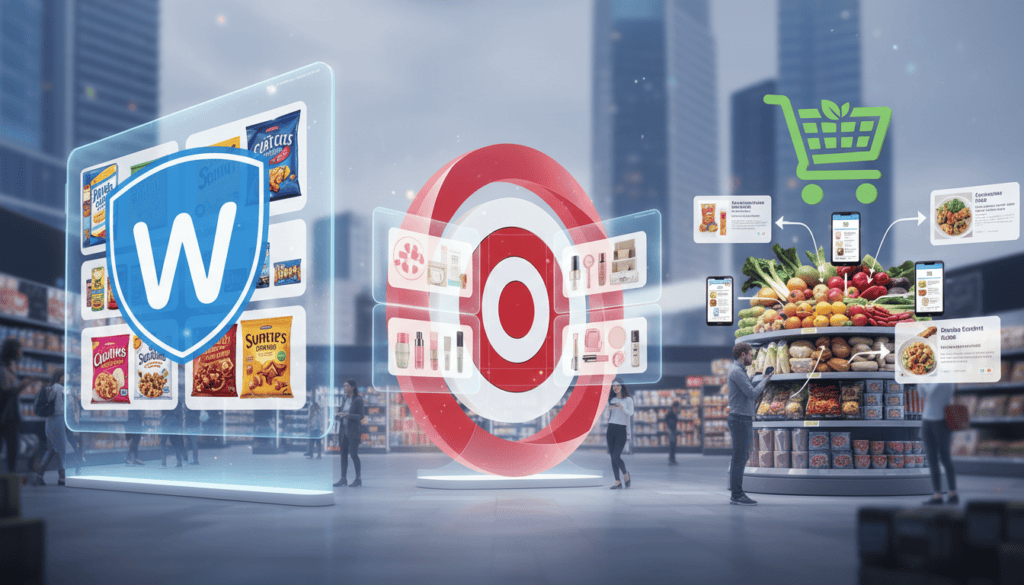
Ninety-three percent of purchasing decisions happen in-store, yet most CPG brands still pour their marketing budgets into broad awareness campaigns instead of point-of-purchase strategies. The brands winning market share understand that the final three feet—that critical space between shelf and shopping cart—determines success more than any TV commercial ever will.

The Point of Purchase Advantage
The modern retail environment has become a battlefield where CPG brands fight for consumer attention in milliseconds. While digital marketing gets most of the headlines, the reality is that point-of-purchase marketing remains one of the highest-ROI investments a brand can make.
Here’s why: Consumers enter stores with loose shopping lists and flexible brand preferences. They’re open to suggestions, responsive to deals, and influenced by visual cues. This creates a unique opportunity that smart CPG marketers are exploiting while their competitors focus on reaching consumers through increasingly expensive and less effective digital channels.
Understanding the Modern Shopper Journey
Today’s shoppers aren’t the same as they were five years ago. They’re time-pressed, deal-conscious, and heavily influenced by social proof. Most importantly, they’re making purchase decisions later in the shopping process than ever before.
The Three-Second Rule
Research shows that shoppers spend an average of three seconds looking at products before making a decision. This means your point-of-purchase strategy needs to communicate value instantly. You don’t have time for subtle messaging or complex value propositions.
The brands that win in this environment use bold visuals, clear benefits, and immediate incentives to capture attention and drive action.
Mobile Integration Reality
While 73% of shoppers use their phones while shopping, they’re not comparing prices as much as you might think. They’re looking up recipes, checking reviews, and sharing purchases on social media. This behavior creates new opportunities for point-of-purchase marketing that connects physical displays with digital experiences.
Core Point-of-Purchase Strategies That Drive Results
Strategic Placement and Positioning
Location within the store matters more than the size of your display. Here’s what works:
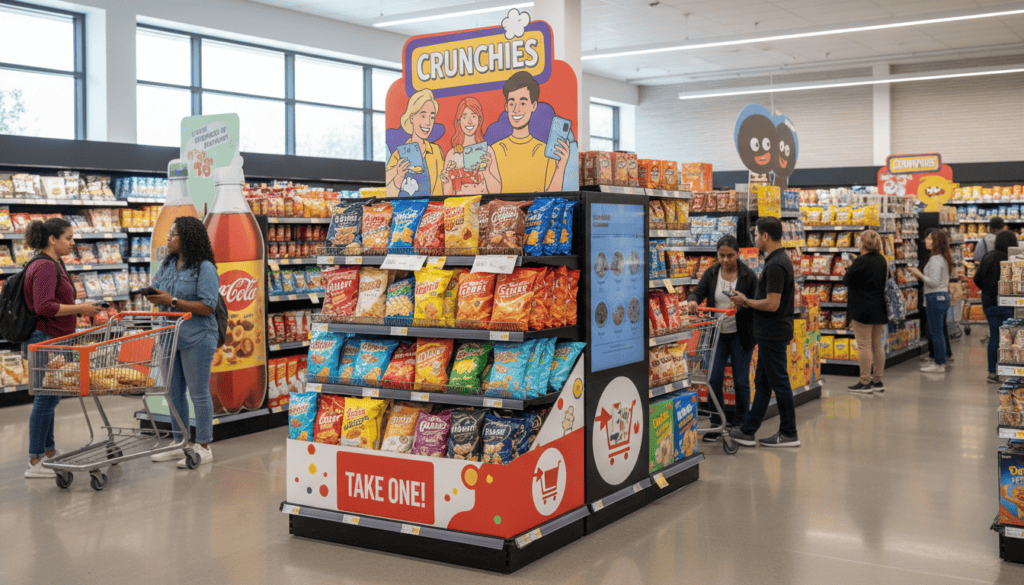
- End caps: Generate 30% higher sales than standard shelf placement
- Eye-level positioning: Increases visibility by 35% compared to top or bottom shelf placement
- High-traffic intersections: Capitalize on natural shopping flow patterns
- Complementary product areas: Cross-merchandising increases basket size by an average of 23%
The key is understanding your retailer’s store layout and negotiating prime real estate based on your sales performance and category management relationships.
Visual Merchandising That Converts
Most CPG brands treat visual merchandising as an afterthought. The winners treat it as a core marketing discipline:
Color Psychology in Retail
- Red creates urgency and drives impulse purchases
- Blue builds trust and works well for health-focused products
- Yellow attracts attention but use sparingly to avoid appearing cheap
- Green suggests natural, organic, or environmentally friendly attributes
Typography and Messaging
Your point-of-purchase messaging needs to be scannable and actionable. Use large, bold fonts for key benefits and prices. Keep messaging to seven words or less for maximum impact. Think “50% More Free” rather than “Temporarily increased product volume at no additional cost.”

Technology-Enhanced Point-of-Purchase Marketing
Digital Displays and Interactive Elements
Digital point-of-purchase displays are becoming more affordable and effective. They allow for dynamic messaging, A/B testing of different offers, and real-time optimization based on store performance data.
Interactive elements like QR codes, NFC tags, or augmented reality experiences can bridge the gap between physical and digital marketing. However, the key is keeping interactions simple and providing immediate value—exclusive coupons, recipe ideas, or product demos work better than brand storytelling.
Data-Driven Optimization
The most successful CPG brands treat point-of-purchase marketing as a data-driven discipline. They track:
- Display performance across different store formats
- Conversion rates by product placement
- Seasonal and promotional lift measurements
- Competitive response and market share changes
This data informs everything from display design to retailer negotiations to promotional timing.
Promotional Strategies That Move Products
Limited-Time Offers That Create Urgency
Scarcity marketing works exceptionally well at point of purchase. Phrases like “While Supplies Last,” “This Week Only,” or “Limited Edition” can increase conversion rates by 20-40%. The key is making the scarcity feel authentic rather than manufactured.
Bundle and Cross-Sell Opportunities
Smart CPG brands don’t just promote their own products—they create value by suggesting complementary purchases. A pasta sauce display might include recipe cards that suggest specific pasta shapes, cheeses, and proteins. This approach helps retailers increase basket size while positioning your brand as a meal solution rather than just an ingredient.
Sampling and Demonstration Programs
Product sampling remains one of the highest-converting point-of-purchase tactics, generating average lift rates of 200-300% on sampling days. The challenge is making sampling programs cost-effective and scalable.
Successful sampling programs focus on:
- High-traffic times (weekends, lunch hours)
- Products with clear taste or functional benefits
- Immediate purchase incentives (sample + discount)
- Data collection for follow-up marketing
Measuring Point-of-Purchase Marketing Success
Key Performance Indicators
Different from digital marketing metrics, point-of-purchase success requires tracking both immediate and longer-term indicators:
Immediate Metrics:
- Lift in unit sales during display periods
- Market share changes in participating stores
- Average transaction size when displays are active
- Coupon redemption rates
Strategic Metrics:
- Brand awareness changes in display markets
- Customer acquisition and retention rates
- Long-term sales velocity improvements
- Retailer satisfaction and relationship strength
Testing and Optimization Framework
The best CPG brands treat every point-of-purchase campaign as a test. They vary elements like messaging, placement, promotional offers, and creative design across different stores or markets, then scale the winning combinations.
This approach requires strong relationships with retail partners and robust data collection systems, but it creates a sustainable competitive advantage over brands that rely on gut instinct or one-size-fits-all approaches.

Common Point-of-Purchase Mistakes to Avoid
Overcomplicating the Message
The biggest mistake CPG brands make is trying to communicate too much at point of purchase. Remember, you have three seconds to make an impact. Focus on one primary benefit, one clear call-to-action, and one compelling reason to buy now.
Ignoring Retailer Priorities
Your point-of-purchase program needs to deliver value to retailers, not just your brand. This means demonstrating how your displays drive category growth, increase basket size, and improve customer satisfaction—not just boost your individual product sales.
Failing to Integrate with Broader Marketing
Point-of-purchase marketing works best when it’s coordinated with your broader marketing efforts. If you’re running TV ads about product quality, your in-store displays should reinforce that message. If you’re launching a digital campaign about convenience, your point-of-purchase materials should highlight easy preparation or usage.
The Future of Point-of-Purchase Marketing
Several trends are reshaping how CPG brands approach retail marketing:
Personalization at Scale
Advanced data analytics and digital display technology are making it possible to customize point-of-purchase messaging based on store demographics, local preferences, and even individual shopping patterns. Brands that master this capability will have a significant advantage.
Sustainability Messaging
Environmental concerns are increasingly influencing purchase decisions. Point-of-purchase displays that highlight sustainable packaging, ethical sourcing, or environmental benefits are seeing strong performance, especially with younger consumers.
Social Media Integration
The most innovative CPG brands are creating point-of-purchase experiences designed for social sharing. Instagram-worthy displays, hashtag campaigns, and user-generated content opportunities can extend the reach of in-store marketing far beyond the physical location.
Building Your Point-of-Purchase Strategy
Successful point-of-purchase marketing starts with understanding your specific category dynamics, retailer relationships, and consumer behavior patterns. It requires coordination between marketing, sales, and trade marketing teams, plus strong data analytics capabilities.
Most importantly, it demands a long-term perspective. The brands winning at point of purchase aren’t running one-off campaigns—they’re building systematic approaches to retail marketing that compound over time.
The opportunity is significant. While your competitors chase expensive digital advertising and struggle with rising customer acquisition costs, point-of-purchase marketing offers a direct path to influence purchasing decisions when consumers are ready to buy.
Ready to develop a point-of-purchase strategy that drives real results? At Beast Creative Agency, our certified specialists combine deep retail marketing expertise with AI-enhanced campaign optimization to create programs that deliver measurable ROI. We believe in radical transparency—you’ll see exactly how your point-of-purchase investments translate into sales growth. Contact us to discuss how we can help your CPG brand win at the moment that matters most.