The average CPG brand invests 75% of its marketing budget in trade marketing, yet most executives can’t clearly articulate their retailer partnership strategy. This disconnect between investment and understanding costs brands millions in missed sales opportunities. Success in consumer packaged goods doesn’t just happen at the consumer level—it’s won in the aisles through strategic retailer collaboration.

Understanding Trade Marketing in the CPG Landscape
Trade marketing represents the bridge between your brand and retail partners. Unlike consumer marketing that targets end users directly, trade marketing focuses on convincing retailers to stock, promote, and prioritize your products over competitors.
Here’s what makes trade marketing different: you’re selling to businesses that will resell your products, not to consumers who’ll use them. This fundamental shift changes everything about your approach, messaging, and success metrics.
The Modern Retail Environment
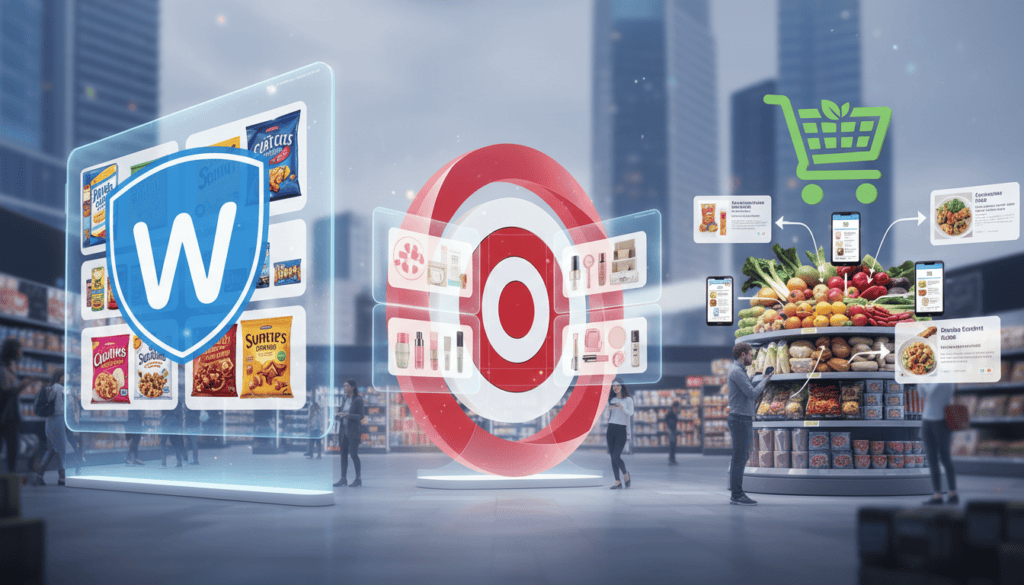
Today’s retail landscape is more complex than ever. Major retailers like Walmart, Target, and Amazon wield enormous influence over which products reach consumers. They’re not just selling your products—they’re curating experiences and managing their own profitability.
Retailers face their own challenges: shrinking margins, increased competition from e-commerce, and consumers who expect seamless omnichannel experiences. Your trade marketing strategy must address these retailer pain points while advancing your brand goals.
Core Trade Marketing Strategies That Drive Results
1. Category Management Partnership
Smart CPG brands position themselves as category experts, not just product suppliers. This means understanding the entire category’s performance, not just your brand’s metrics.
Effective category management involves:
- Analyzing category trends and consumer behavior patterns
- Providing retailers with actionable insights about shelf optimization
- Recommending product assortments that maximize category profitability
- Sharing market research that helps retailers make informed decisions
The reality is that retailers value partners who help them understand their business better. When you provide category insights, you’re not just selling products—you’re becoming an essential business partner.
2. Promotional Strategy Alignment
Most businesses miss this: successful promotions require perfect timing alignment between your marketing calendar and retailer objectives. Your promotional strategy should complement, not compete with, retailer goals.
Consider these promotional approaches:
- Seasonal tie-ins: Align product promotions with retailer seasonal merchandising plans
- New product launches: Coordinate introductory pricing with retailer new item programs
- Volume incentives: Structure deals that reward retailers for meeting specific sales targets
- Exclusive offers: Provide retailer-specific promotions that differentiate their offering
3. Data-Driven Performance Marketing
Here’s what works in today’s data-rich environment: CPG brands that share performance data and insights build stronger retailer relationships. Retailers want partners who understand the numbers and can prove ROI.
Key performance areas to track and share:
- Velocity metrics (units moved per store per week)
- Inventory turn rates and out-of-stock incidents
- Promotion lift and baseline sales impact
- Consumer demographic insights and purchase patterns
- Competitive performance benchmarks

Building Effective Retailer Relationships
Understanding Retailer Motivations
Retailers aren’t just focused on your brand—they’re managing hundreds or thousands of products. Your success depends on understanding what drives their decisions.
Primary retailer motivations include:
- Profit margin optimization: Products that generate strong margins get priority
- Inventory efficiency: Fast-moving products reduce carrying costs
- Consumer satisfaction: Products that enhance shopping experience build loyalty
- Category leadership: Partnerships that strengthen competitive position
Account-Specific Customization
This might surprise you: treating all retailers the same is one of the biggest mistakes CPG brands make. Each retailer has unique customer demographics, competitive pressures, and business objectives.
Successful account customization involves:
- Tailoring product assortments to match customer preferences
- Adjusting promotional timing to align with retailer calendars
- Providing marketing support that fits retailer brand guidelines
- Offering flexible terms that address specific business needs
Digital Integration in Trade Marketing
E-commerce Collaboration
E-commerce has transformed trade marketing beyond recognition. Online retailers like Amazon require completely different strategies than traditional brick-and-mortar partners.
Essential e-commerce considerations include:
- Search optimization: Helping retailers optimize product listings for discoverability
- Review management: Supporting positive customer review generation
- Fulfillment efficiency: Ensuring product availability matches online demand
- Digital advertising: Coordinating paid search and display advertising efforts
Omnichannel Integration
Modern consumers don’t distinguish between online and offline retail experiences. Your trade marketing strategy shouldn’t either. Successful CPG brands create seamless experiences across all retail touchpoints.
Key integration strategies:
- Consistent pricing across all retail channels
- Coordinated promotional timing between online and offline
- Unified brand messaging across retail environments
- Cross-channel inventory visibility and management
Measuring Trade Marketing Success
Essential Metrics and KPIs
You can’t manage what you don’t measure. Effective trade marketing requires tracking metrics that matter to both your brand and retail partners.
Critical performance indicators include:
- Distribution metrics: Store count, percentage of authorized distribution
- Velocity measures: Sales per store, market share within accounts
- Promotional effectiveness: Lift rates, promotion ROI, baseline impact
- Relationship health: Account satisfaction scores, partnership depth
ROI Calculation and Reporting
Here’s the thing: retailers increasingly demand ROI proof for trade marketing investments. Your ability to demonstrate clear returns determines future partnership opportunities.
Effective ROI reporting involves:
- Baseline sales establishment before promotional periods
- Incremental sales calculation during and after promotions
- Long-term impact assessment on brand equity and loyalty
- Competitive impact analysis and market share gains

Common Trade Marketing Challenges and Solutions
Budget Allocation Difficulties
Most CPG brands struggle with trade marketing budget allocation. How much should go to promotions versus account support? What’s the right balance between acquisition and retention activities?
Smart allocation strategies include:
- Account tier system: Allocate resources based on account potential and performance
- Performance-based budgeting: Tie spending to measurable outcomes
- Test-and-learn approach: Start small with new initiatives before scaling
- Seasonal adjustment: Align spending with peak selling periods
Communication and Coordination Issues
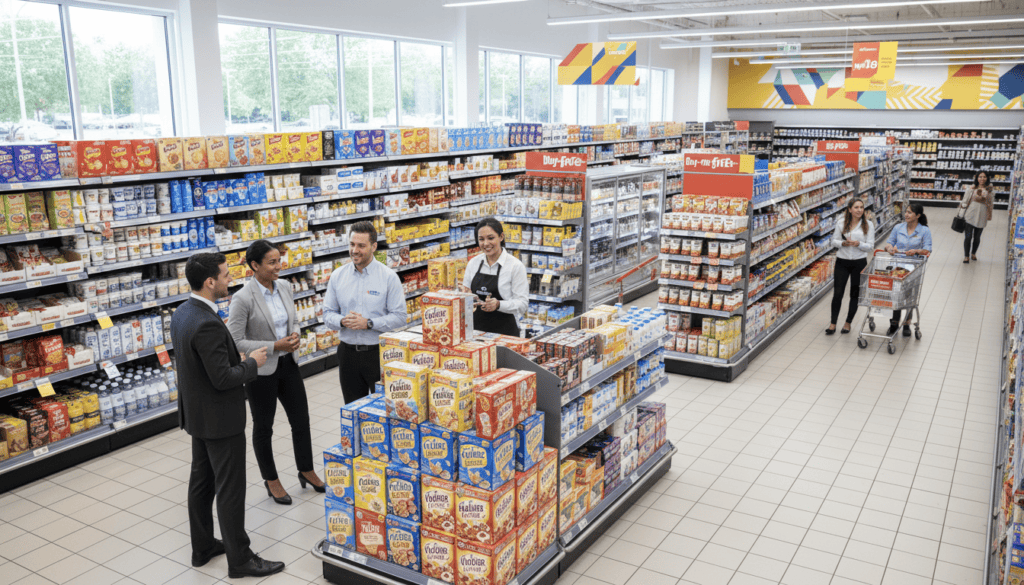
Poor communication between sales and marketing teams kills trade marketing effectiveness. When account managers don’t understand promotional strategies, or marketing doesn’t grasp retailer constraints, campaigns fail.
Solutions for better coordination:
- Regular cross-functional planning meetings
- Shared dashboards for real-time performance visibility
- Clear role definition and accountability structures
- Joint retailer meetings with sales and marketing present
Future Trends in CPG Trade Marketing
Technology-Driven Insights
Artificial intelligence and machine learning are revolutionizing trade marketing. These technologies enable more precise demand forecasting, personalized promotional strategies, and automated campaign optimization.
Emerging technology applications include:
- Predictive analytics for inventory planning
- AI-powered promotional optimization
- Real-time performance monitoring and adjustment
- Automated reporting and insight generation
Sustainability and Social Responsibility
Consumers and retailers increasingly prioritize sustainability. CPG brands must integrate environmental and social considerations into trade marketing strategies.
Key sustainability focuses:
- Packaging reduction and recyclability programs
- Supply chain transparency and ethical sourcing
- Carbon footprint reduction initiatives
- Community impact and social responsibility programs
Building Your Trade Marketing Excellence
Successful trade marketing isn’t about having the biggest budget—it’s about building genuine partnerships that create value for everyone involved. The most effective CPG brands view retailers as strategic partners, not just distribution channels.
Start by deeply understanding each retailer’s business model, customer base, and competitive pressures. Then develop customized strategies that address their specific needs while advancing your brand objectives.
The reality is that trade marketing complexity will only increase as retail continues evolving. Brands that invest in building strong analytical capabilities, fostering genuine retailer relationships, and staying ahead of technology trends will dominate their categories.
At Beast Creative Agency, we help CPG brands develop and execute trade marketing strategies that drive measurable results. Our AI-enhanced campaigns and radical transparency approach ensure you’re not just spending trade dollars—you’re investing in partnerships that generate lasting competitive advantages. Ready to transform your retailer relationships into growth engines? Let’s discuss how our certified specialists can accelerate your trade marketing success.