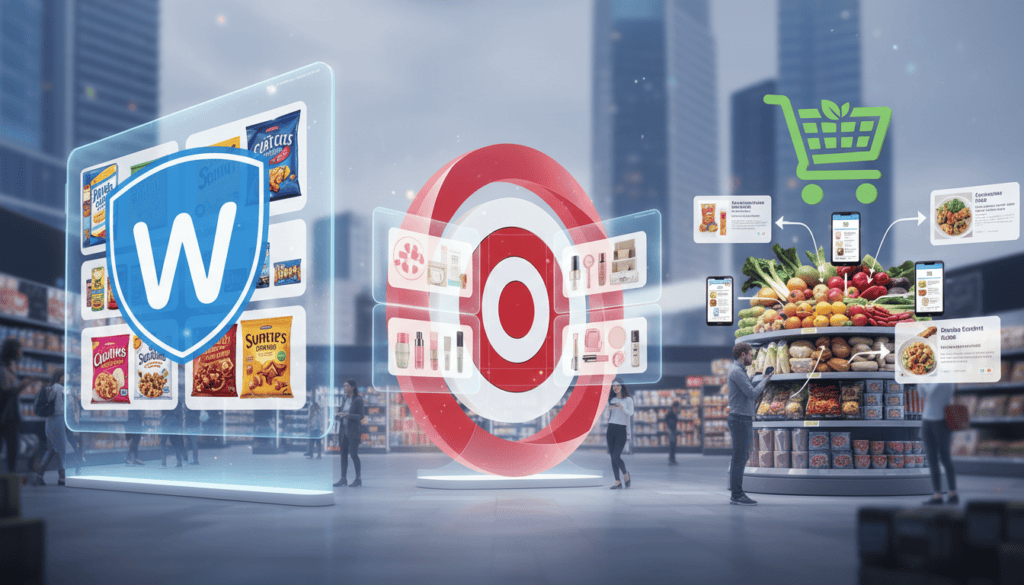
Over 40,000 new CPG products launch annually, yet 95% fail within their first year—often because they blend into the noise rather than breaking through it. The difference between shelf success and retail failure isn’t just product quality; it’s the strategic brand identity that commands attention both in-store and across digital channels.

The Dual-Channel Challenge: Physical Meets Digital
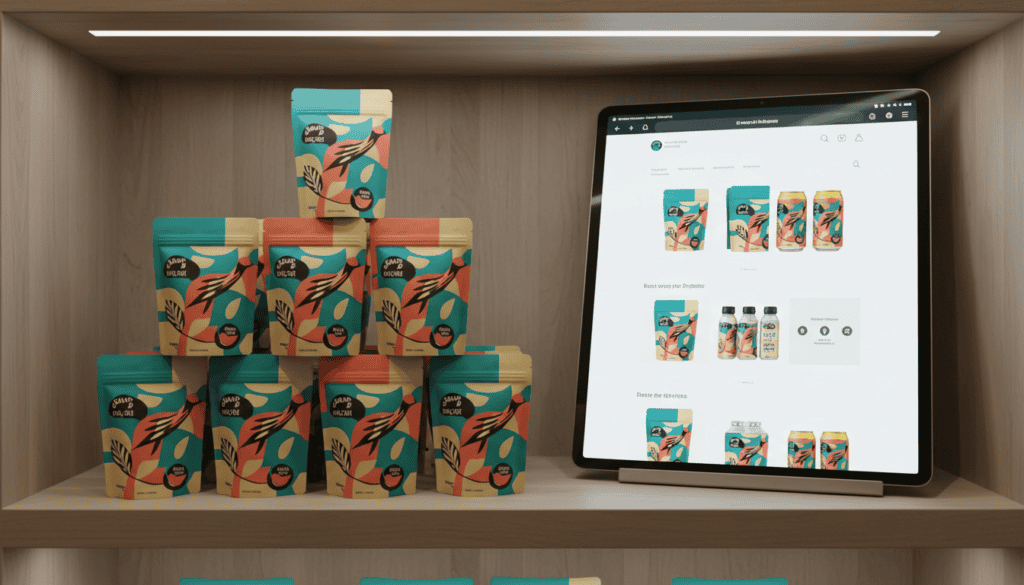
CPG brands face a unique branding challenge that most industries don’t encounter. Your brand identity must work flawlessly in two completely different environments: the crowded retail shelf where split-second decisions happen, and the digital space where consumers research, compare, and purchase online.
Here’s the thing—what works on a physical package doesn’t always translate to a smartphone screen. Your brand needs to be flexible enough to adapt while maintaining consistency across every touchpoint. This dual-channel approach requires strategic thinking from day one.
Foundation Elements of Standout CPG Brand Identity
Color Psychology That Converts
Color isn’t just about looking pretty—it’s about psychology and shelf impact. Research shows consumers make subconscious judgments about products within 90 seconds, and up to 90% of that assessment is based on color alone.
Most businesses miss this: your primary brand color should be chosen based on your category’s color landscape, not just your personal preferences. If every competitor uses blue, your strategic advantage might be owning orange or green in that space.
Consider these color strategies:
- Category disruption: Choose colors that stand apart from direct competitors
- Emotional alignment: Match colors to the feeling you want consumers to associate with your brand
- Digital optimization: Ensure your colors remain vibrant and distinguishable on various screen types
- Cultural considerations: Research color meanings in your target markets
Typography That Works Everywhere
Your typography needs to be legible from three feet away on a shelf and crystal clear on a 5-inch phone screen. This means choosing fonts that scale beautifully and maintain personality across sizes.
The reality is that decorative fonts often fail in digital applications. Focus on clean, distinctive typefaces that can carry your brand’s personality through weight, spacing, and application rather than ornate letterforms.
Logo Design for Maximum Versatility
Your logo will appear on everything from tiny social media profile pictures to large retail displays. It needs multiple variations:
- Full horizontal version for wide applications
- Stacked version for square formats
- Icon-only version for small digital applications
- Reversed versions for dark backgrounds
- Single-color versions for cost-effective printing
Shelf-Specific Brand Strategy
The Three-Second Rule
Consumers spend an average of three seconds looking at each product on shelf before moving on. Your packaging needs to communicate your brand’s value proposition in that tiny window.
This might surprise you: the most successful CPG brands don’t try to communicate everything on their primary display panel. Instead, they focus on one clear message and use hierarchy to guide the eye quickly to the most important information.
Key elements for shelf success:
- Brand name prominence: Make it the largest text element
- Clear product differentiation: Communicate what makes you different immediately
- Visual breathing room: Don’t crowd your design—white space sells
- Consistent brand elements: Use the same colors, fonts, and style across your entire product line
Packaging as Brand Ambassador
Your packaging is often the first and only brand touchpoint many consumers will have. It needs to work harder than a business card or website—it needs to educate, persuade, and create emotional connection simultaneously.
Consider these packaging strategies:
- Use the back panel for brand storytelling
- Include QR codes that link to exclusive content or offers
- Design for social sharing—will customers want to photograph your product?
- Think about the unboxing experience for e-commerce orders

Digital Brand Identity Optimization
Social Media Consistency
Your brand identity must translate seamlessly across social platforms while adapting to each platform’s unique requirements. Instagram favors vibrant, high-contrast visuals, while LinkedIn responds better to professional, clean presentations.
Here’s what works for CPG brands online:
- Consistent color palette: Use the same brand colors but adjust saturation for digital displays
- Adaptable templates: Create flexible design systems that maintain brand consistency across different content types
- Platform-specific optimization: Adjust your approach for each platform while maintaining core brand elements
E-commerce Considerations
Online shopping removes the tactile experience of in-store browsing. Your brand identity needs to work harder to create connection and trust through screens.
Digital-first considerations include:
- High-contrast designs that remain clear in thumbnail images
- Consistent brand experience from product photos to website design
- Mobile-first thinking—most consumers browse on phones
- Video integration for product demonstrations and brand storytelling
Building Brand Recognition Through Consistency
The Power of Visual Systems
Successful CPG brands don’t just have logos—they have complete visual systems. These systems include patterns, iconography, photography styles, and illustration approaches that work together to create instant brand recognition.
Most businesses underestimate the power of secondary brand elements. Consider how Coca-Cola’s ribbon element or Nike’s swoosh work beyond just logo applications—they’ve become visual shorthand for the entire brand.
Touchpoint Mapping
List every place your brand appears, from packaging to social media to trade show displays. Each touchpoint should reinforce your brand identity while serving its specific function.
Critical touchpoints include:
- Product packaging (primary and secondary)
- Website and e-commerce listings
- Social media profiles and content
- Email marketing templates
- Trade show materials and sell sheets
- Retail partnerships and co-marketing opportunities
Testing and Iteration Strategies
Real-World Testing Methods
The reality is that even the most strategic brand identity needs real-world validation. Before finalizing your brand identity, test it in conditions that mirror your actual selling environment.
Effective testing approaches:
- Shelf simulation: Create mockups of your products next to competitors
- Digital A/B testing: Test different brand applications in online advertising
- Focus groups: Get feedback from your actual target demographic
- Retail partner feedback: Buyers often have insights about what works in their stores
Metrics That Matter
Track brand identity performance through both qualitative and quantitative measures:
- Brand recognition and recall studies
- Social media engagement rates
- Conversion rates in different retail environments
- Customer acquisition costs across channels

Common Pitfalls to Avoid
Overcomplicating the Message
Here’s what most new CPG brands get wrong: they try to communicate every product benefit and brand value in their visual identity. The strongest brands focus on one core message and communicate it clearly.
Avoid these common mistakes:
- Using too many colors in your primary palette
- Cramming too much text on packaging
- Choosing trendy design elements that won’t age well
- Ignoring competitor analysis during brand development
- Failing to consider manufacturing constraints early in the design process
Inconsistent Application
Brand guidelines exist for a reason, but they’re only effective if everyone follows them. Create clear, easy-to-use brand standards that cover common applications and edge cases.
Future-Proofing Your Brand Identity
Scalability Planning
Your brand identity should be designed to grow with your business. Consider how it will work when you expand your product line, enter new markets, or adapt to emerging retail channels.
Think about:
- How your brand system will handle product line extensions
- International market considerations and cultural adaptations
- New retail channels and format requirements
- Evolving digital platforms and technologies
Staying Relevant Without Losing Identity
The most successful CPG brands evolve their visual identity over time while maintaining core recognition elements. This requires understanding which elements are essential to your brand’s DNA and which can be refreshed.
Measuring Brand Identity Success
Success metrics for CPG brand identity go beyond just looking good. You need to track performance indicators that directly relate to business outcomes.
Key performance indicators include:
- Shelf velocity: How quickly products move in retail environments
- Digital engagement: Social media interactions and website behavior
- Brand recognition: Unaided and aided recall in consumer surveys
- Purchase intent: Consumer willingness to try and repeat purchase
- Price premium: Your ability to command higher prices than generic alternatives
Building Long-Term Brand Equity
Strong CPG brand identity isn’t just about immediate sales—it’s about building lasting equity that supports premium pricing and customer loyalty over time.
This means thinking beyond just visual elements to consider how your brand identity supports your overall positioning strategy. Every visual choice should reinforce the brand promise you’re making to consumers.
Creating a CPG brand identity that truly stands out requires strategic thinking, creative execution, and ongoing optimization. The brands that succeed are those that understand their dual-channel challenge and create flexible systems that work beautifully everywhere their customers encounter them.
Your brand identity is one of your most valuable business assets. When done right, it doesn’t just help products stand out on shelf—it builds lasting relationships with consumers who become loyal advocates for your brand. At Beast Creative Agency, we specialize in developing data-driven brand identities that deliver measurable ROI across both physical and digital channels. Our AI-enhanced approach ensures your brand connects with the right audience while our radical transparency keeps you informed every step of the way.