Consumer packaged goods brands are shifting 73% of their marketing budgets toward video content, yet most still treat every platform like television advertising. The brands winning market share understand that YouTube requires storytelling depth, TikTok demands authentic moments, and short-form content thrives on immediate engagement.

The CPG Video Marketing Landscape Has Changed Everything
The traditional CPG marketing playbook doesn’t work anymore. Consumers scroll past polished commercials but stop for authentic product demonstrations. They skip pre-roll ads but watch 15-minute YouTube reviews. This shift means your video strategy needs to match how people actually consume content on each platform.
Here’s what’s driving this change: consumers want to see products in action before they buy. They’re researching on TikTok, comparing options on YouTube, and making purchase decisions based on short-form content creators they trust. Your brand either adapts to these viewing habits or gets left behind.
YouTube Strategy: Building Long-Term Brand Authority
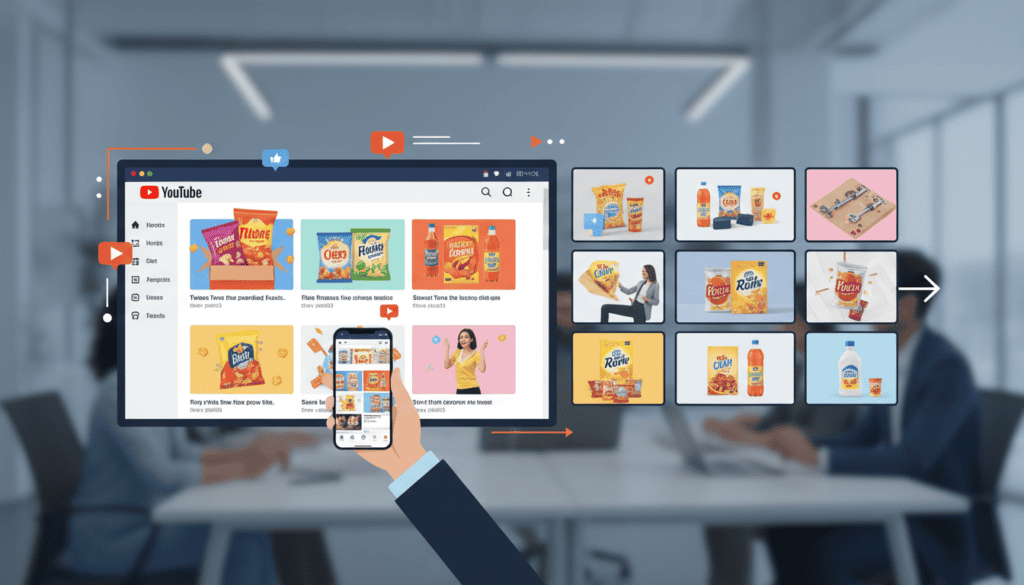
YouTube works differently for CPG brands than other platforms. People come here to learn, compare products, and dive deep into topics. Your content strategy should reflect these intentions.
Content Types That Drive CPG Sales
- Product education videos: Show how your product solves specific problems
- Behind-the-scenes content: Manufacturing processes, ingredient sourcing, quality control
- Comparison videos: Position your product against competitors (done tastefully)
- User-generated content compilations: Real customers using your products
- Recipe or usage tutorials: Multiple ways to use your product
The key is providing genuine value. Don’t just showcase features – solve problems your customers actually have. When someone searches “best protein powder for weight loss,” they want detailed information, not a 30-second commercial.
YouTube SEO for CPG Brands
Most businesses miss this: YouTube is the second largest search engine. People search for product reviews, tutorials, and comparisons before making purchases. Your video titles and descriptions need to match these search behaviors.
Start with keyword research specific to your product category. Tools like TubeBuddy or VidIQ help identify what your potential customers are actually searching for. Then create content that directly answers those queries.
Here’s what works for CPG YouTube SEO:
- Include your main keyword in the first 60 characters of your title
- Write detailed descriptions (200+ words) with relevant keywords
- Use custom thumbnails that stand out in search results
- Add timestamps for longer videos to improve watch time
- Include relevant tags, but focus on accuracy over volume
Building Community on YouTube
YouTube’s algorithm rewards engagement, so building an active community around your brand matters. Respond to comments within the first few hours of posting. Ask questions that encourage viewers to share their experiences with your products.
Create series-based content to keep viewers coming back. “Healthy Meal Prep Mondays” or “Ingredient Spotlights” give people a reason to subscribe and return regularly. Consistency beats perfection every time.
TikTok: Authenticity Over Production Value
TikTok flips traditional marketing on its head. The content that performs best looks native to the platform – authentic, unpolished, and genuinely entertaining. Your million-dollar commercial will likely flop, but a genuine product demonstration might go viral.
TikTok Content That Converts
The reality is that TikTok users can spot advertising from miles away. They scroll past anything that feels too promotional. But they’ll watch and share content that entertains first, educates second, and sells third.
Here are content formats that work for CPG brands on TikTok:
- Quick recipe or usage hacks: Show your product solving problems in under 60 seconds
- Trend participation: Use popular sounds and formats while incorporating your product naturally
- Before/after transformations: Perfect for beauty, cleaning, or food products
- Employee takeovers: Let your team show personality behind the brand
- Reaction content: Respond to customer reviews or competitor claims
Understanding TikTok’s Algorithm
TikTok’s algorithm prioritizes completion rates and engagement over follower count. This means a brand with 1,000 followers can outperform one with 100,000 if their content keeps people watching.
Focus on these metrics:
- Watch time: Hook viewers in the first 3 seconds
- Engagement rate: Comments, shares, and likes within the first hour
- Replays: Content so good people watch it multiple times
- Completion rate: Percentage of viewers who watch your entire video
Most businesses get this wrong by front-loading their videos with branding. Start with the payoff, then work backward. Show the result first, then reveal how your product achieved it.
TikTok Advertising vs. Organic Content
TikTok’s advertising platform offers sophisticated targeting, but organic content often delivers better ROI for CPG brands. The platform rewards authentic content, and users trust organic posts more than obvious advertisements.
That said, TikTok ads work well for:
- Promoting high-performing organic content to broader audiences
- Targeting specific demographics during product launches
- Retargeting website visitors with product-focused content
- Testing creative concepts before investing in larger campaigns

Short-Form Content Strategy Across Platforms
Instagram Reels, YouTube Shorts, and TikTok each have unique audiences and algorithms, but successful short-form content follows similar principles. The key is adapting your core message to each platform’s specific culture.
Platform-Specific Adaptations
Here’s how to modify your content for each platform:
TikTok: Raw, authentic, trend-focused. Use popular sounds and participate in challenges.
Instagram Reels: More polished than TikTok but less formal than traditional Instagram posts. Focus on aesthetic appeal.
YouTube Shorts: Educational content performs well. Think quick tutorials or product demonstrations.
The same product demonstration might work on all three platforms, but you’d film it differently for each one. TikTok gets the handheld, authentic version. Instagram gets better lighting and composition. YouTube gets clear audio and educational value.
Content Repurposing for Maximum Efficiency
Smart CPG brands don’t create entirely new content for each platform. They develop content systems that allow one shoot to produce multiple videos.
Here’s a practical approach:
- Plan content themes monthly (seasonal products, trending topics, customer questions)
- Shoot multiple angles and formats during each content session
- Create platform-specific versions from the same raw footage
- Test performance across platforms to identify top performers
- Amplify successful content through paid promotion
Measuring Success: KPIs That Actually Matter
Vanity metrics like views and followers don’t pay the bills. Focus on measurements that connect directly to business outcomes.
Platform-Specific Success Metrics
YouTube:
- Watch time and average view duration
- Click-through rates to your website
- Subscriber growth rate
- Comments and community engagement
TikTok:
- Completion rates (people watching entire videos)
- Share rates (content compelling enough to share)
- Profile visits from video views
- Hashtag performance and reach
All Platforms:
- Traffic driven to your website
- Conversion rates from video traffic
- Cost per acquisition through video content
- Brand mention increases
Attribution Challenges and Solutions
Video marketing attribution isn’t straightforward. Customers might discover your brand on TikTok, research on YouTube, and purchase weeks later through Google search. Traditional last-click attribution misses this journey.
Use these approaches for better attribution:
- UTM parameters for all video descriptions and bio links
- Platform-specific discount codes to track conversions
- Branded hashtag campaigns to monitor organic mentions
- Customer surveys asking about discovery channels
- Google Analytics audience overlap reports
Content Production at Scale
Consistent video content requires systems, not just creativity. Most CPG brands struggle with the volume of content these platforms demand.
Building Your Content Factory
Think assembly line, not artisan workshop. Develop repeatable formats that can be produced efficiently:
Batch content creation: Dedicate specific days to shooting multiple videos. One product demonstration can become five different videos with different angles and hooks.
Template-based editing: Create editing templates for common content types. This speeds up post-production and maintains visual consistency.
User-generated content systems: Encourage customers to create content featuring your products. Offer incentives, feature their content, and build community around sharing.
Tools and Technology
The right tools make content production manageable:
- Planning: Content calendars that sync across platforms
- Creation: Mobile-first tools for quick editing and posting
- Analytics: Dashboard that combine insights from all platforms
- Collaboration: Systems that let teams review and approve content efficiently
Remember: the best camera is the one you have with you. Many successful CPG brands create engaging content using just smartphones and simple editing apps.

Common Mistakes to Avoid
Most CPG brands make predictable errors when starting video marketing. Learning from these mistakes saves time and budget.
Platform Misunderstanding
Don’t treat every platform like television advertising. Each platform has unique content expectations and user behaviors. What works on YouTube rarely works unchanged on TikTok.
Over-Production Paralysis
Perfect is the enemy of good, especially on platforms that reward authenticity. Start posting consistently rather than waiting for perfect content. You’ll learn more from audience feedback than from endless planning.
Ignoring Community Building
Video marketing isn’t just broadcasting – it’s conversation starting. Brands that only post without engaging miss the relationship-building opportunity that drives long-term loyalty.
Future-Proofing Your Video Strategy
Video marketing continues evolving rapidly. The platforms, features, and algorithms change constantly, but certain principles remain consistent.
Focus on building skills and systems that adapt to change:
- Understand your audience deeply, regardless of platform
- Develop authentic brand voice that translates across mediums
- Build content creation processes that scale efficiently
- Maintain flexibility to test new platforms and formats
- Invest in measurement systems that track real business impact
The brands succeeding in video marketing aren’t necessarily the ones with the biggest budgets. They’re the ones that understand their customers, create genuine value, and adapt quickly to platform changes.
Getting Started: Your 90-Day Action Plan
Don’t try to master every platform simultaneously. Pick one platform, build competency, then expand.
Days 1-30: Foundation
- Choose your primary platform based on where your customers spend time
- Set up professional accounts with optimized profiles
- Create your first 10 pieces of content
- Establish posting schedule and stick to it
Days 31-60: Optimization
- Analyze performance of your initial content
- Double down on content types that perform well
- Begin engaging actively with your audience
- Test different posting times and content formats
Days 61-90: Expansion
- Add second platform using lessons learned from first
- Develop content repurposing systems
- Start measuring business impact beyond vanity metrics
- Plan longer-term content strategies based on results
Video marketing for CPG brands isn’t just about creating content – it’s about building relationships at scale. The brands that understand this distinction are the ones that turn viewers into loyal customers. When you’re ready to develop a video strategy that drives real business results, working with specialists who understand both platform nuances and CPG challenges can accelerate your success significantly.