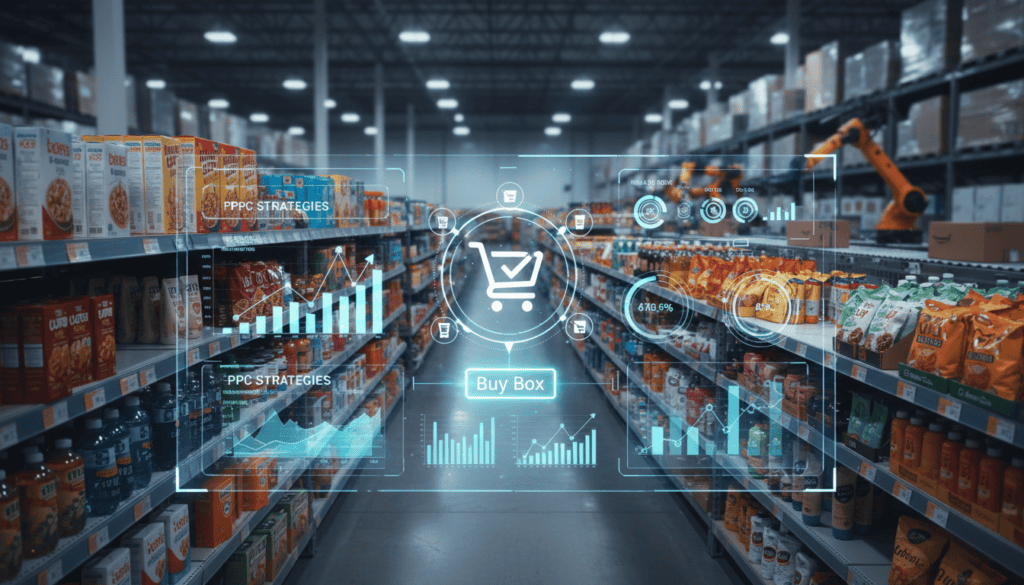
Amazon’s Buy Box drives 82% of all marketplace sales, yet most CPG brands still treat it like a mystery black box instead of a winnable competitive advantage. The difference between brands that consistently capture this coveted real estate and those that watch competitors steal their customers often comes down to strategic PPC execution.

Understanding the Buy Box Algorithm for CPG Success
The Buy Box isn’t just about having the lowest price—it’s a complex algorithm that evaluates multiple factors to determine which seller gets the prime placement. For CPG brands, this presents both unique challenges and opportunities.
Amazon’s algorithm considers several key factors:
- Price competitiveness (not necessarily the lowest)
- Fulfillment method (FBA typically wins)
- Seller performance metrics
- Inventory levels and availability
- Customer satisfaction scores
- Account health and history
Here’s what most CPG brands miss: PPC campaigns directly influence several of these factors, creating a compound effect that goes far beyond simple ad visibility.
Strategic PPC Approaches That Move the Needle
Sponsored Products: The Foundation Strategy
Sponsored Products campaigns should form the backbone of your Buy Box strategy, but not in the way most brands think. Rather than focusing solely on broad keyword targeting, successful CPG brands use a three-tiered approach:
Tier 1: Defensive Campaigns
Target your own brand terms and product-specific keywords. This prevents competitors from stealing traffic on your branded searches and helps maintain Buy Box eligibility through consistent sales velocity.
Tier 2: Category Expansion
Focus on broader category terms where your products compete. For example, if you sell organic snacks, target “healthy snacks,” “organic food,” and related terms that capture purchase-intent traffic.
Tier 3: Competitor Targeting
Strategically target competitor brand terms and ASINs, but only when you have a clear value proposition or price advantage.
Sponsored Brands: Building Market Presence
Sponsored Brands campaigns serve a dual purpose for Buy Box optimization. They increase overall brand visibility while driving traffic that can improve your organic ranking signals.
The key is creating compelling headlines that highlight your unique selling propositions. Instead of generic copy like “Premium Quality Products,” try specific benefits: “Made with 100% Organic Ingredients” or “Certified Non-GMO Since 2015.”
Sponsored Display: The Retention Play
Most CPG brands underestimate Sponsored Display campaigns, but they’re essential for Buy Box success. These campaigns help you:
- Retarget customers who viewed your products but didn’t purchase
- Target customers of complementary products
- Build awareness beyond search-based advertising
The reality is that CPG purchases often involve multiple touchpoints before conversion. Sponsored Display helps ensure you’re present throughout that journey.
Bid Management Strategies That Actually Work
Dynamic Bidding with Purpose
Amazon’s dynamic bidding options—down only, up and down, and fixed bids—each serve specific purposes in a Buy Box-focused strategy.
Use “down only” for:
- High-converting, branded keywords
- Products with thin margins
- Defensive campaigns protecting your market share
Use “up and down” for:
- Discovery campaigns targeting new keywords
- Competitive categories where aggressive bidding is necessary
- Products with healthy margins that can absorb higher CPCs
Dayparting and Seasonality Considerations
CPG products often show distinct purchasing patterns. Breakfast items peak in morning hours, while snacks see evening spikes. Use Amazon’s hourly reporting to identify these patterns and adjust bids accordingly.
This might surprise you: many successful CPG brands actually increase bids during lower-traffic hours when competition is reduced, allowing them to win placements at lower costs.

Advanced Keyword Research for CPG Categories
Beyond Basic Product Terms
Effective keyword research for CPG brands goes deeper than obvious product descriptors. Consider these often-overlooked keyword categories:
Occasion-based keywords:
- “back to school snacks”
- “office lunch ideas”
- “movie night treats”
Diet and lifestyle keywords:
- “keto-friendly”
- “plant-based options”
- “gluten-free alternatives”
Problem-solving keywords:
- “quick breakfast solutions”
- “healthy kids snacks”
- “portion-controlled meals”
Negative Keywords: The Unsung Heroes
Negative keywords are particularly important for CPG brands because food and beverage searches often include terms that indicate incompatible dietary restrictions or preferences.
For example, if you sell regular pasta, you’ll want to exclude terms like “gluten-free,” “keto,” and “low-carb” to avoid wasting spend on unlikely converters.
Product Listing Optimization for PPC Success
Title Optimization That Supports Ad Performance
Your product titles need to work double duty—ranking organically while supporting your PPC campaigns. The most effective CPG titles follow this structure:
Brand + Key Benefit + Product Type + Size/Quantity + Key Features
Instead of: “Smith’s Crackers Original Flavor 12oz”
Try: “Smith’s Organic Whole Grain Crackers, Original Flavor, 12oz Box, Non-GMO Snack Crackers”
This approach gives your PPC campaigns more keywords to match against while improving Quality Score through relevance.
Images That Convert Ad Traffic
When PPC drives traffic to your listings, your images need to close the deal. For CPG products, this means:
- Main image: Clean, white background showing the full product
- Secondary images: Lifestyle shots showing the product in use
- Ingredient/nutrition focus: Highlight key selling points like organic certification
- Size comparison: Help customers understand exactly what they’re buying
Measuring Success Beyond ROAS
Buy Box Metrics That Matter
Traditional PPC metrics don’t tell the whole story for Buy Box optimization. Track these additional indicators:
Buy Box Percentage: Use tools like Jungle Scout or Helium 10 to monitor how often you win the Buy Box compared to competitors.
Organic Rank Movement: PPC campaigns should improve your organic rankings for target keywords over time.
Share of Voice: Measure how often your ads appear for important category terms.
Customer Lifetime Value: CPG brands benefit from repeat purchases, so factor LTV into campaign profitability calculations.
Attribution Challenges and Solutions
Amazon’s attribution reporting has limitations, especially for CPG brands where customers might see an ad for one product but purchase a different size or flavor.
Here’s what works: Create separate campaigns for each product variation, but use shared negative keyword lists and coordinated bidding strategies to avoid internal competition.
Seasonal Strategy Execution
Planning for CPG Seasonality
CPG products often have predictable seasonal patterns. Ice cream peaks in summer, soup sales spike in winter, and back-to-school drives snack purchases in late summer.
Smart brands start ramping PPC spend 4-6 weeks before seasonal peaks to build momentum and improve organic rankings before competition intensifies.
Inventory Coordination
Nothing kills Buy Box eligibility faster than running out of stock during a PPC push. Coordinate your advertising calendar with inventory planning to ensure you can fulfill the demand you’re generating.

Common Pitfalls and How to Avoid Them
The Price Race to the Bottom
Many CPG brands assume winning the Buy Box requires having the lowest price. This leads to margin-destroying price wars that benefit no one except Amazon shoppers.
Instead, focus on value differentiation. Highlight unique benefits, better packaging, superior ingredients, or brand heritage that justify premium pricing.
Ignoring Mobile Optimization
Over 70% of Amazon searches happen on mobile devices, yet many CPG brands optimize their listings and ads for desktop viewing.
Your main product image needs to be clear and compelling even at thumbnail size. Your bullet points should lead with benefits, not features, since mobile users skim content quickly.
Neglecting Review Management
Poor reviews can tank your Buy Box eligibility regardless of PPC performance. Develop a systematic approach to encouraging positive reviews and addressing negative feedback promptly.
Use Amazon’s Request a Review button, follow up with customers through Buyer-Seller Messages, and consider using Amazon’s Brand Registry tools to report policy violations on competitor reviews.
Advanced Automation and Optimization
When to Use Amazon’s AI vs. Manual Control
Amazon continues expanding its automated bidding and targeting options. Here’s when each approach works best:
Use automation for:
- Large catalogs where manual management isn’t scalable
- Discovery campaigns finding new keyword opportunities
- Brands with limited Amazon advertising experience
Maintain manual control for:
- High-stakes branded campaigns
- Products with complex seasonality patterns
- Categories with rapidly changing competitive dynamics
Third-Party Tools Worth the Investment
While Amazon’s native tools cover the basics, serious CPG brands benefit from additional software:
- Helium 10 or Jungle Scout: For keyword research and Buy Box monitoring
- Sellics or Perpetua: For campaign automation and optimization
- Datasembly or Profitero: For competitive price monitoring
The key is choosing tools that integrate well with your existing workflow rather than creating additional complexity.
Building Long-Term Competitive Advantages
Brand Registry Benefits for PPC
Amazon Brand Registry isn’t just about brand protection—it unlocks advertising features that can dramatically improve your Buy Box competitiveness:
- Sponsored Brand Video campaigns
- Brand Store creation and promotion
- Enhanced brand analytics
- A+ Content for better conversion rates
Customer Data and Personalization
Use Amazon Attribution to track how your external marketing drives Amazon sales. This data helps you understand customer journey touchpoints and optimize your full-funnel strategy.
Consider running coordinated campaigns across Amazon DSP, Google Ads, and social platforms to create a cohesive brand experience that supports Buy Box objectives.
Conclusion: Your Path to Buy Box Domination
Winning the Buy Box isn’t about luck or having the deepest pockets—it’s about executing a coordinated strategy that aligns PPC campaigns with Amazon’s algorithm priorities. The brands that consistently capture this valuable real estate understand that every element of their Amazon presence, from listing optimization to inventory management, works together to signal authority and relevance.
Success requires more than just launching a few Sponsored Products campaigns. You need strategic thinking, data-driven optimization, and the expertise to navigate Amazon’s constantly evolving advertising platform.
Ready to transform your Amazon advertising strategy? At Beast Creative Agency, our certified specialists combine years of platform experience with AI-enhanced campaign management to deliver the radical transparency and personalized ROI that CPG brands need to dominate their categories. Let’s discuss how our proven methodologies can help you capture and defend the Buy Box in your market.