Convenience stores generate over $650 billion annually in the U.S., yet most CPG brands treat them as an afterthought in their marketing strategy. This massive oversight leaves billions in potential revenue on the table, especially when c-store shoppers make 70% of their purchase decisions at the point of sale.

Understanding the Convenience Store Landscape
The convenience store channel operates differently from traditional retail. Shoppers aren’t browsing leisurely—they’re grabbing essentials, fuel, and impulse purchases during quick stops. This creates unique marketing challenges and opportunities that CPG brands must understand to succeed.
Here’s what makes c-store marketing distinct: customers spend an average of just three to four minutes inside the store, transaction values are typically lower than grocery stores, and location density means intense local competition. Yet these same factors create advantages for brands that get their strategy right.
The C-Store Consumer Profile
Understanding your c-store customer is the foundation of effective marketing. These shoppers are typically time-pressed, value convenience over price, and often make repeat visits to the same locations. They’re also more likely to try new products when they’re prominently displayed or promoted.
Demographics show that c-store customers skew younger and more diverse than traditional grocery shoppers. They’re also increasingly health-conscious, driving demand for better-for-you options alongside traditional convenience foods.
Product Placement and Merchandising Strategies
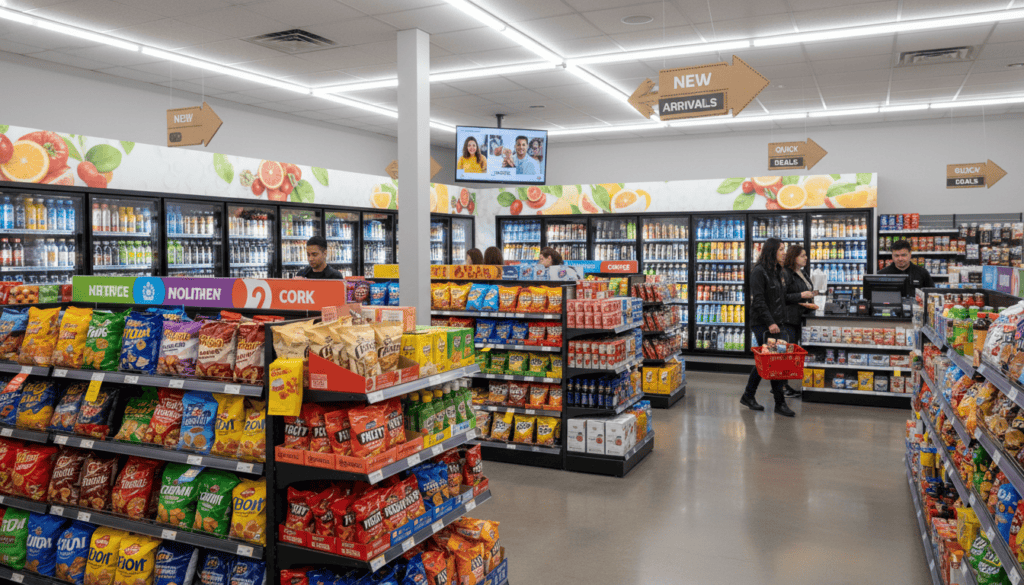
In convenience stores, location is everything. The reality is that prime real estate—end caps, checkout areas, and eye-level shelving—drives the majority of impulse purchases, which is why effective retail merchandising strategies are essential for CPG success. Smart CPG brands work closely with store operators to secure these high-traffic spots.
The Power of Point-of-Purchase Displays
Custom displays can increase product sales by 300-400% in convenience stores. Unlike grocery chains where permanent fixtures dominate, c-stores often welcome branded displays that help organize products and attract customer attention.
Effective POP displays for c-stores should be:
- Compact and space-efficient
- Easy to restock
- Visually striking with bold colors and clear branding
- Positioned in high-traffic areas like near the register or beverage coolers
Cross-Merchandising Opportunities
Smart brands create logical product pairings that encourage multiple purchases. Think chips near the sandwich station, energy drinks by the coffee machine, or gum and mints at checkout. These strategic placements tap into natural shopping patterns and increase basket size.
Local Marketing Tactics That Work
Most businesses miss this: convenience stores are inherently local businesses, even when they’re part of national chains. Each location serves a specific community with unique preferences, demographics, and shopping patterns.
Hyper-Local Promotions
Successful CPG brands adapt their promotions to match local events, weather patterns, and consumer preferences. A promotion for hot coffee drinks works better in Minnesota than Miami, while iced beverages might perform better during local summer festivals.
Consider these hyper-local approaches:
- Weather-triggered promotions (hot drinks during cold snaps, cold beverages during heat waves)
- Event-based marketing around local sports games, festivals, or community events
- Demographic-specific product assortments based on neighborhood characteristics
- Timing promotions around local traffic patterns and peak shopping hours
Community Engagement Programs
Convenience stores often serve as community hubs, especially in smaller towns or urban neighborhoods. CPG brands can tap into this by supporting local initiatives, sponsoring community events, or partnering with local organizations.

Digital Marketing for Physical Convenience Stores
Here’s what works in the digital space for c-store marketing: mobile-first strategies that complement the physical shopping experience rather than replacing it.
Mobile Apps and Loyalty Programs
The most successful c-store loyalty programs focus on frequency and convenience. Customers want quick transactions and meaningful rewards. Digital loyalty programs can track purchase patterns and deliver personalized offers that drive repeat visits.
Effective mobile strategies include:
- One-tap purchasing for regular customers
- Location-based offers when customers are near stores
- Personalized product recommendations based on purchase history
- Digital coupons that can be redeemed quickly at checkout
Social Media Marketing for C-Stores
Social media works differently for convenience stores than other retail channels. The focus should be on building local community connections, showcasing new products, and creating buzz around promotions.
Instagram and TikTok are particularly effective for showcasing new snacks, drinks, and limited-time offers. Short-form video content highlighting product features or preparation methods can drive trial and purchase intent.
Category Management and Assortment Planning
Smart category management goes beyond just stocking popular items. It’s about creating a strategic mix that maximizes profit per square foot while meeting customer needs.
Data-Driven Product Selection
The best CPG brands use sales data, demographic information, and local market insights to optimize their convenience store assortments. This might mean carrying different product sizes, flavors, or varieties based on the specific location’s customer base.
Key metrics to track include:
- Sales velocity by product and location
- Profit margins on different items
- Seasonal sales patterns
- Customer demographic data
- Competitive product performance
Seasonal and Limited-Time Offers
Convenience stores are perfect testing grounds for new products and limited-time offers. The quick turnover and impulse-driven purchases make customers more willing to try new items, especially when they’re prominently displayed.
Building Strong Retailer Relationships
This might surprise you, but many CPG brands treat convenience store relationships as purely transactional without understanding retail partnership costs and the value of building genuine partnerships with store operators and managers. The most successful brands invest in building genuine partnerships with store operators and managers.
Providing Marketing Support
Store operators appreciate CPG partners who provide more than just products. Effective support includes marketing materials, staff training, promotional planning, and data insights that help improve overall store performance.
Consider offering:
- Free point-of-sale materials and displays
- Staff training on product features and selling points
- Promotional calendars that align with key selling seasons
- Performance data and insights to help optimize assortments
Joint Marketing Initiatives
The most effective c-store marketing campaigns combine CPG brand power with local retailer knowledge. Joint promotions, co-branded advertising, and shared marketing costs can create win-win situations that drive results for both parties.

Measuring Success in C-Store Marketing
Traditional retail metrics don’t always translate directly to convenience store success. The focus should be on velocity, frequency, and local market penetration rather than just total volume.
Key Performance Indicators
Track these essential metrics to gauge your c-store marketing effectiveness:
- Sales per store per week (velocity)
- Market share within specific trade areas
- Distribution gains and losses
- Price realization and promotional effectiveness
- Customer trial and repeat purchase rates
Technology and Data Analytics
Modern point-of-sale systems and retail analytics platforms provide unprecedented insights into c-store performance. Smart brands use this data to optimize everything from product assortments to promotional timing.
Future Trends in C-Store Marketing
The convenience store landscape continues evolving rapidly. Successful CPG brands stay ahead of emerging trends rather than reacting to them after competitors have gained advantages.
Health and Wellness Focus
Consumer demand for healthier options is reshaping c-store assortments. This creates opportunities for CPG brands with better-for-you products, but also challenges traditional convenience food categories.
Technology Integration
From cashierless stores to AI-powered inventory management, technology is transforming the c-store experience. CPG brands need to understand how these changes affect customer behavior and marketing opportunities.
Conclusion: Your C-Store Marketing Success Plan
Convenience store marketing success requires a different approach than traditional retail channels. It’s about understanding the unique shopping patterns, building strong local relationships, and creating marketing strategies that work within the fast-paced c-store environment.
The brands that succeed focus on placement, personalization, and partnership. They understand that every location is unique, every customer interaction is brief but valuable, and every marketing dollar must work harder in this competitive channel.
Ready to transform your convenience store marketing strategy? Working with a specialized CPG marketing partner who understands c-store dynamics can help you create data-driven campaigns that deliver measurable results. Our certified specialists combine deep industry experience with AI-enhanced targeting to maximize your c-store marketing ROI. Contact us today to discover how our personalized approach can drive your convenience store success.