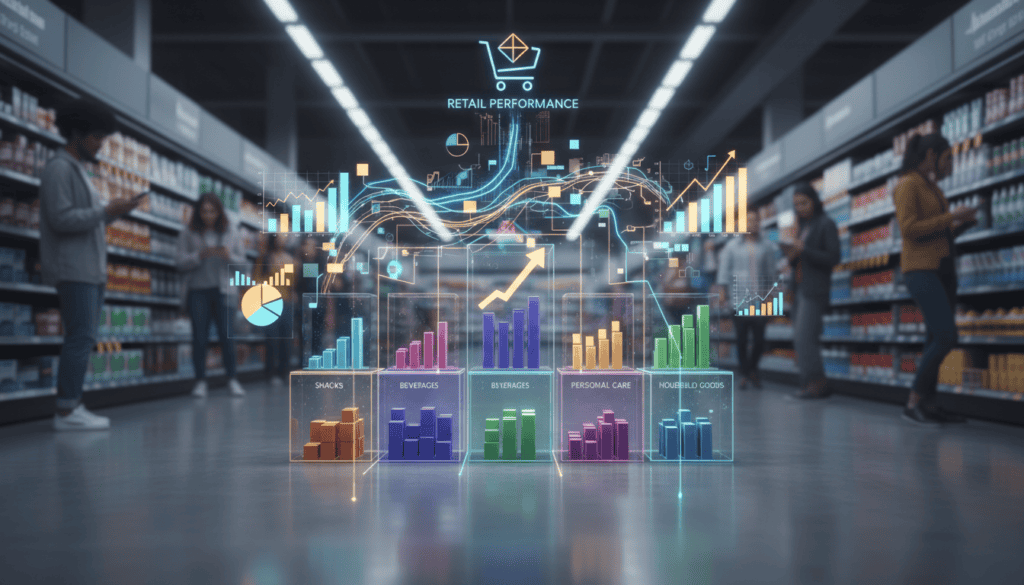
Retail shelves tell a story of strategic battles fought at eye level, where product placement can make or break quarterly earnings. CPG category management isn’t just about organizing products—it’s about orchestrating a data-driven symphony that maximizes every square inch of retail real estate for mutual brand and retailer success.

Understanding CPG Category Management Fundamentals
Category management transforms how consumer packaged goods brands approach retail partnerships. Instead of focusing solely on individual product performance, this strategy treats entire product categories as strategic business units.
The core principle revolves around collaboration between manufacturers and retailers to optimize category performance rather than competing for limited shelf space. This approach creates win-win scenarios where both parties benefit from increased sales, improved margins, and enhanced consumer satisfaction.
The Four Pillars of Effective Category Management
Successful category management rests on four fundamental pillars:
- Data-driven insights: Using point-of-sale data, consumer research, and market analytics to make informed decisions
- Consumer focus: Prioritizing shopper needs and purchase behaviors over internal company politics
- Retailer partnership: Building collaborative relationships that go beyond traditional vendor-customer dynamics
- Category optimization: Viewing success through the lens of total category growth rather than individual brand performance
The Strategic Role of Category Captains
Category captains serve as the strategic architects of retail categories. These are typically leading brands that retailers designate to provide category insights, recommendations, and management expertise.
Here’s what makes category captainship valuable: You’re not just managing your own products anymore. You’re responsible for the entire category’s health, which means understanding competitor dynamics, consumer trends, and retailer objectives simultaneously.
Responsibilities and Opportunities
Category captains typically handle several key responsibilities:
- Conducting category reviews and presenting growth opportunities
- Analyzing shopper behavior and purchase patterns
- Recommending optimal product assortment and shelf placement
- Identifying white space opportunities for innovation
- Developing promotional strategies that benefit the entire category
The opportunity here is significant. Category captains often see 15-25% higher sales growth compared to non-captain brands within the same category. This advantage comes from deeper retailer relationships, better shelf positioning, and first access to category insights.
Data Analytics: The Engine of Category Success
Modern category management runs on data. The most successful CPG brands use advanced analytics to uncover insights that drive category performance.
Essential Data Sources
Effective category management requires multiple data streams:
- POS data: Real-time sales performance across SKUs, locations, and time periods
- Syndicated data: Market share, competitive performance, and industry benchmarks
- Panel data: Consumer purchase behavior, loyalty patterns, and demographic insights
- Shopper research: In-store behavior, decision-making processes, and satisfaction metrics
- Digital analytics: Online shopping patterns, social media sentiment, and e-commerce performance
Turning Data into Actionable Insights
Raw data means nothing without proper analysis. The most effective category managers focus on identifying patterns that reveal opportunities:
Look for seasonal trends that suggest promotional timing. Analyze basket affinity to understand cross-selling opportunities. Study demographic data to identify underserved consumer segments. Track velocity metrics to optimize product mix and inventory levels.
This might surprise you: The best category insights often come from combining different data sources rather than relying on single metrics. A drop in sales velocity might seem concerning until you cross-reference it with competitive pricing data and realize it’s an industry-wide trend.

Optimizing Product Assortment and Placement
Smart assortment planning balances consumer choice with operational efficiency. Too few options limit sales potential, while too many create confusion and operational complexity.
The Science of Shelf Optimization
Shelf placement isn’t random—it’s strategic. Eye-level placement typically generates 35% higher sales than bottom-shelf positioning. End-cap displays can increase sales by 30-400% depending on the product and promotion.
Here’s what works for assortment optimization:
- Analyze role-based performance: Identify which products drive category traffic versus margin
- Segment by consumer need: Organize products around how consumers shop the category
- Balance variety and velocity: Maintain adequate choice while focusing on fast-moving SKUs
- Consider cross-category opportunities: Look for adjacency opportunities that increase basket size
Space-to-Sales Ratio Optimization
The goal isn’t maximizing shelf presence—it’s maximizing sales per square foot. This requires understanding each SKU’s space elasticity and optimizing accordingly.
High-velocity products often deserve disproportionate shelf space, while niche products might perform better with minimal but strategic placement. The key is testing different configurations and measuring results consistently.
Building Effective Retailer Partnerships
Category management success depends on strong retailer relationships. This goes beyond traditional sales interactions to become true business partnerships.
Creating Mutual Value
The most successful CPG brands approach retailers as partners, not customers. This means:
- Sharing insights that benefit the entire category, not just your brands
- Investing in retailer-specific initiatives that drive their business objectives
- Providing training and support that helps retail partners succeed
- Developing joint business plans with shared metrics and accountability
Here’s the reality: Retailers want partners who understand their business challenges. If you can help them solve problems beyond your immediate product categories, you’ll earn preferred partner status.
Communication and Collaboration Best Practices
Effective retailer partnerships require structured communication:
- Regular business reviews: Quarterly meetings focused on category performance and opportunities
- Joint planning sessions: Collaborative development of annual and seasonal strategies
- Data sharing protocols: Established processes for sharing insights and analytics
- Escalation procedures: Clear pathways for resolving issues and conflicts
Promotional Strategy and Execution
Category-focused promotional strategies generate better results than brand-focused approaches. Instead of competing for promotional slots, successful brands orchestrate category events that benefit all stakeholders.
Types of Category Promotions
Different promotional approaches serve different strategic purposes:
- Category drivers: Promotions designed to increase overall category traffic
- Trial generators: Introductory offers that expand the consumer base
- Loyalty builders: Rewards programs that increase purchase frequency
- Seasonal activations: Category-wide events tied to calendar periods or holidays
Measuring Promotional Effectiveness
Most businesses miss this: Promotional success shouldn’t be measured by short-term sales spikes alone. The best promotions drive long-term category growth and consumer behavior change.
Track metrics like incremental volume, baseline sales impact, competitive response, and consumer retention rates. This complete view helps optimize future promotional strategies and budget allocation.

Digital Transformation in Category Management
E-commerce and digital channels are reshaping category management fundamentals. Online shopping behavior differs significantly from in-store patterns, requiring adapted strategies.
Digital-First Category Strategies
Digital category management involves unique considerations:
- Search optimization and product discoverability
- Review management and social proof strategies
- Digital shelf optimization and content management
- Omnichannel integration and consistency
The challenge isn’t choosing between digital and traditional approaches—it’s creating integrated strategies that work across all channels while recognizing each channel’s unique characteristics.
Measuring Category Management Success
Effective measurement requires both short-term performance metrics and long-term strategic indicators.
Key Performance Indicators
Track these essential metrics:
- Category growth: Total category sales, units, and market share trends
- Velocity metrics: Sales per point of distribution and inventory turnover
- Profitability measures: Gross margins, trade spend efficiency, and profit per square foot
- Consumer metrics: Trial rates, repeat purchase, and satisfaction scores
- Retailer satisfaction: Partnership strength and preferred vendor status
Long-term Strategic Metrics
Don’t focus solely on quarterly results. Monitor strategic health through:
- Market share trajectory within managed categories
- New product success rates and innovation pipeline health
- Retailer partnership expansion and deepening relationships
- Category captain appointments and retention rates
Future Trends and Opportunities
Category management continues evolving with technology, consumer behavior, and retail landscape changes.
Emerging Technologies
Artificial intelligence and machine learning are transforming category management capabilities. Predictive analytics help forecast demand more accurately, while automated optimization tools suggest real-time assortment and pricing adjustments.
Connected retail environments provide unprecedented shopper insights, enabling personalized category experiences and dynamic optimization based on real-time behavior patterns.
Sustainability and Purpose-Driven Categories
Consumer demand for sustainable and socially responsible products is creating new category management opportunities. Brands that successfully integrate purpose-driven messaging with category strategy often see premium positioning and enhanced retailer partnerships.
Conclusion
CPG category management represents the evolution from transactional vendor relationships to strategic business partnerships. Success requires combining data-driven insights with collaborative retailer relationships, optimized assortments with effective promotional strategies, and traditional retail understanding with digital-first approaches.
The brands that excel at category management don’t just manage products—they orchestrate category ecosystems that create value for consumers, retailers, and manufacturers simultaneously. This holistic approach drives sustainable competitive advantages and long-term business growth.
Ready to transform your CPG category strategy? Beast Creative Agency’s certified specialists bring AI-enhanced analytics and radical transparency to category management optimization. Our personalized approach delivers measurable ROI through data-driven insights and strategic retailer partnerships that maximize your category performance.