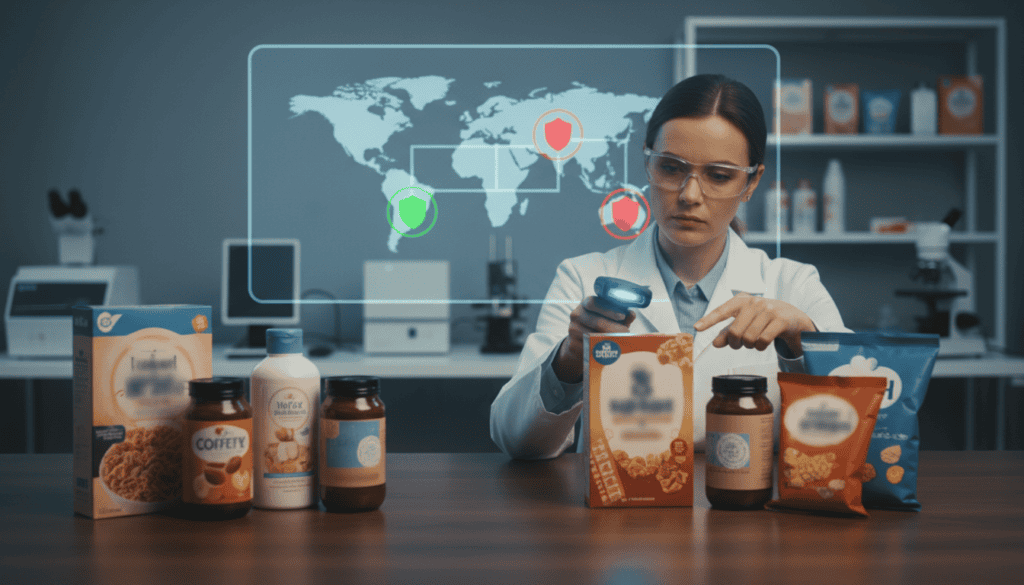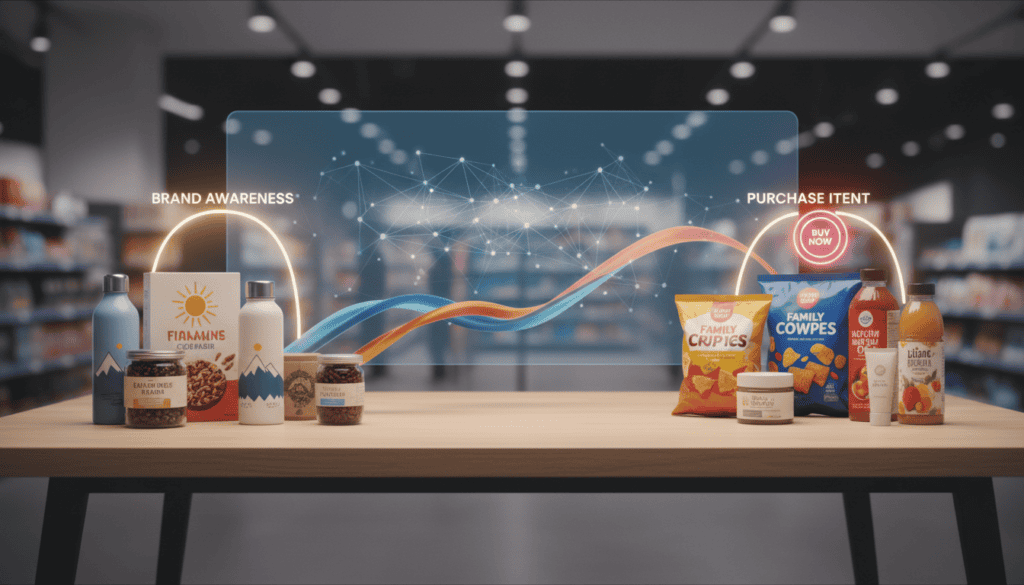
Consumer packaged goods brands face a brutal reality: 73% of purchase decisions happen at the point of sale, yet most CPG marketing strategies focus heavily on awareness while neglecting the critical bridge to actual buying behavior. This disconnect between brand recognition and purchase intent is costing companies millions in lost revenue opportunities.

The CPG Marketing Challenge: Beyond Traditional Awareness
CPG marketing isn’t just about getting your brand noticed—it’s about creating a seamless journey from first impression to checkout. The modern consumer packaged goods landscape demands strategies that work across multiple touchpoints, from digital discovery to in-store decision-making.
Here’s the thing: traditional awareness campaigns often stop short of driving actual purchase behavior. You might have great brand recall, but if customers aren’t reaching for your product when it matters most, you’re missing the mark.
Understanding the CPG Consumer Journey
Today’s CPG buyers don’t follow a linear path. They research online, compare prices on mobile, seek recommendations on social media, and make final decisions in physical or digital aisles. Your marketing strategy needs to meet them at every stage.
The most successful CPG brands recognize that awareness and purchase intent aren’t separate goals—they’re interconnected outcomes that require coordinated effort across channels.
Core CPG Marketing Strategies That Drive Results
1. Omnichannel Brand Consistency
Your brand message should be instantly recognizable whether someone encounters it on Instagram, in a grocery store, or through a podcast ad. This consistency builds trust and reduces the cognitive load for consumers making quick purchase decisions.
Key elements of omnichannel consistency include:
- Visual identity that translates across all platforms
- Messaging that remains coherent but adapts to channel-specific contexts
- Product positioning that aligns with brand values
- Customer experience that feels seamless across touchpoints
2. Data-Driven Audience Segmentation
Not all CPG consumers are created equal. Your heavy users have different motivations than occasional buyers, and your brand switchers need different messaging than loyal customers.
Effective segmentation goes beyond demographics to include:
- Purchase frequency and volume patterns
- Brand loyalty indicators
- Price sensitivity levels
- Channel preferences for discovery and purchase
- Lifestyle and value alignment factors
This might surprise you: many successful CPG brands find their most profitable segment isn’t their largest one. Focus your resources where they’ll generate the highest return.
3. Content Marketing That Educates and Inspires
CPG content marketing works best when it provides genuine value beyond product promotion. Think recipes, lifestyle tips, problem-solving advice, and entertainment that naturally incorporates your brand.
The reality is that consumers don’t want to be sold to constantly. They want to be helped, entertained, and inspired. Your content should solve problems your products address without being overly promotional.
Effective CPG content strategies include:
- Recipe and usage inspiration for food and beverage brands
- Lifestyle content that positions your product within broader contexts
- Educational material about ingredients, benefits, or category trends
- User-generated content that showcases real customer experiences
4. Influencer and Social Proof Marketing
CPG brands benefit enormously from social proof, whether that’s influencer partnerships, customer reviews, or user-generated content. People trust recommendations from others more than brand claims.
Here’s what works in CPG influencer marketing:
- Micro-influencers with engaged, relevant audiences
- Authentic product integration rather than obvious sponsorships
- Long-term partnerships that build genuine brand affinity
- Performance tracking that goes beyond reach to measure purchase influence
Digital Strategies for CPG Brand Building
Search Engine Marketing and SEO
CPG brands need to be discoverable when consumers search for category terms, specific products, or related problems. This requires both paid search strategies and organic SEO efforts.
Most businesses miss this: CPG SEO isn’t just about product keywords. You should also target informational searches that indicate purchase intent, like “best protein bars for weight loss” or “organic baby food options.”
Your search strategy should include:
- Category and competitor keyword targeting
- Local SEO for retail location searches
- Voice search optimization for mobile and smart speaker queries
- Visual search optimization for image-based discovery
Social Media Advertising and Engagement
Social platforms offer unique opportunities for CPG digital marketing to combine awareness building with direct response marketing. You can reach broad audiences while also driving specific actions.
Platform-specific strategies that work:
- Instagram: Visual storytelling and shoppable posts
- Facebook: Detailed targeting and conversion tracking
- TikTok: Trend-based content and authentic product integration
- Pinterest: Recipe and lifestyle inspiration with product links
- YouTube: Educational content and product demonstrations
Email Marketing and Retention
Email remains one of the highest-ROI channels for CPG marketing, especially for building repeat purchase behavior. Your email strategy should nurture customers throughout their lifecycle with your brand.
Effective CPG email campaigns include:
- Welcome series that educate new customers about product benefits
- Recipe and usage ideas that encourage consumption and repurchase
- Personalized recommendations based on purchase history
- Exclusive offers and early access to new products
- Reactivation campaigns for lapsed customers

Traditional Media Integration
Television and Connected TV Advertising
TV advertising still plays a crucial role in CPG marketing, but it’s evolved significantly. Connected TV and streaming platforms offer better targeting and measurement than traditional broadcast.
Here’s the thing about CPG TV advertising: it works best when integrated with digital strategies rather than operating in isolation. Your TV creative should drive online engagement and support omnichannel campaigns.
Radio and Podcast Advertising
Audio advertising offers unique advantages for CPG brands, including high engagement rates and the ability to reach consumers during specific activities like commuting or exercising.
Podcast advertising particularly resonates with CPG consumers because of the trust relationship between hosts and listeners. When done authentically, it can drive significant brand lift and purchase intent.
In-Store and Retail Marketing
Point-of-Purchase Optimization
Since most CPG purchase decisions happen in-store, understanding purchase decision drivers and optimizing your retail presence is critical. This includes everything from package design to shelf placement to promotional displays.
Key in-store strategies include:
- Package design that stands out on crowded shelves
- Clear value propositions and benefits communication
- Strategic placement and cross-merchandising opportunities
- Promotional materials that drive trial and repeat purchase
Trade Marketing and Retailer Relationships
Strong relationships with retailers can make or break CPG marketing efforts. Your trade marketing strategy should support both retailer goals and consumer demand generation.
This includes collaborative efforts like:
- Joint promotional campaigns
- Category management support
- Consumer insights sharing
- New product launch coordination
Measuring CPG Marketing Success
Key Performance Indicators
CPG marketing measurement requires tracking both brand health metrics and sales performance indicators. You need to understand what’s driving awareness and what’s converting that awareness into purchases.
Essential CPG marketing metrics include:
- Brand awareness: Aided and unaided recall
- Purchase intent: Stated likelihood to buy
- Market share: Volume and value share in category
- Distribution: Numeric and weighted distribution
- Velocity: Sales per point of distribution
- Customer lifetime value: Long-term profitability per customer
Attribution and Multi-Touch Analysis
Understanding which marketing touchpoints contribute to purchase decisions is complex in CPG marketing. Consumers might see your ad on TV, research online, and buy in-store weeks later.
The reality is that perfect attribution is impossible, but you can get close enough to make informed decisions. Focus on incrementality testing and multi-touch attribution models that account for the complexity of the CPG purchase journey.

Emerging Trends in CPG Marketing
Direct-to-Consumer Strategies
Many CPG brands are adding direct-to-consumer channels to complement their retail presence. This provides better customer data, higher margins, and more control over the brand experience.
D2C strategies that work for CPG brands include subscription models for frequently repurchased items, exclusive products available only through direct channels, personalization and customization options, and enhanced customer service and education.
- Subscription models for frequently repurchased items
- Exclusive products available only through direct channels
- Personalization and customization options
- Enhanced customer service and education
Sustainability and Purpose-Driven Marketing
Consumers increasingly make CPG choices based on brand values and environmental impact. Purpose-driven marketing isn’t just nice to have—it’s becoming essential for long-term brand success.
Most businesses miss this: sustainability messaging works best when it’s integrated into your overall brand story rather than treated as a separate campaign. It should feel authentic and meaningful, not like a marketing afterthought.
Artificial Intelligence and Personalization
AI is transforming CPG marketing through better targeting, personalized content creation, and predictive analytics. Brands that embrace these technologies gain significant competitive advantages.
AI applications in CPG marketing include:
- Predictive modeling for customer behavior
- Dynamic content personalization
- Automated campaign optimization
- Voice and visual search optimization
Building Your CPG Marketing Strategy
Start with Clear Objectives
Every CPG marketing strategy should begin with specific, measurable objectives that align with business goals. Are you launching a new product, defending market share, or expanding into new segments?
Your objectives should be specific enough to guide decision-making but flexible enough to adapt as market conditions change.
Integrate Channels for Maximum Impact
The most successful CPG marketing strategies don’t rely on single channels. They create integrated campaigns where each touchpoint reinforces and amplifies the others.
This means your TV advertising should drive social engagement, your social content should support in-store promotion, and your email marketing should reinforce your overall brand positioning.
Test, Learn, and Optimize
CPG marketing requires constant experimentation and optimization. Consumer preferences shift, new channels emerge, and competitive dynamics evolve. Your strategy should be built for continuous improvement.
Here’s what works: start with small tests, measure results rigorously, and scale successful tactics quickly. Don’t wait for perfect data—act on directional insights and refine as you go.
Conclusion
Successful CPG marketing strategies require a delicate balance of brand building and performance marketing, traditional reach and digital precision, awareness generation and purchase activation. The brands that win in today’s competitive landscape are those that can effectively connect with consumers across all touchpoints while driving measurable business results.
The key is to start with a deep understanding of your target consumers, choose the right mix of channels for your specific goals and budget, and continuously optimize based on performance data. Remember, the goal isn’t just to be noticed—it’s to be chosen.
At Beast Creative Agency, we specialize in developing integrated CPG marketing strategies that drive both brand awareness and purchase intent. Our experienced team combines traditional marketing expertise with AI-enhanced campaign optimization to deliver measurable results for consumer packaged goods brands. Ready to transform your CPG marketing approach? Let’s discuss how we can help you connect with consumers and drive growth.