Consumer packaged goods companies face a stark reality: 73% of customers now expect to move seamlessly between online and offline channels during their purchase journey. Yet most CPG brands still operate in silos, creating friction that drives customers straight to competitors. The solution isn’t just multichannel presence—it’s true omnichannel integration.

Understanding CPG Omnichannel Selling
Omnichannel selling goes far beyond having multiple touchpoints. It’s about creating a unified experience where your brand story, product information, and customer service remain consistent whether someone discovers your product on Instagram, researches it on your website, or picks it up from a retail shelf.
Here’s what separates true omnichannel from simple multichannel approaches: data integration. When a customer adds your product to their cart online but abandons it, your email marketing should know. When they use your mobile app to check nutritional information, your customer service team should have that context during their next call.
The CPG Challenge
CPG companies face unique obstacles that other industries don’t encounter. You’re often selling through intermediaries—retailers, distributors, and marketplaces—which creates layers between you and your end customers. This distance makes it harder to control the customer experience and gather valuable consumer data.
Most businesses miss this: the key isn’t fighting these intermediaries but working with them to create connected experiences. Your direct-to-consumer channels should complement, not compete with, your retail partnerships.
Building Your Omnichannel Foundation
Data Integration Strategy
Your customer data platform becomes the nervous system of your omnichannel operation. Without integrated data, you’re essentially running multiple businesses instead of one cohesive brand.
Start by connecting these essential data sources:
- E-commerce platforms – Purchase history, browsing behavior, cart abandonment data
- Retail partners – Sales data, inventory levels, promotional performance
- Social media – Engagement metrics, user-generated content, brand mentions
- Customer service – Support tickets, product feedback, satisfaction scores
- Mobile apps – Usage patterns, location data, preference settings
The reality is that most CPG brands collect tons of data but struggle to make it actionable. Focus on creating customer segments based on behavior patterns rather than just demographics. Someone who researches extensively online but buys in-store needs different messaging than someone who makes impulse purchases through social media.
Technology Stack Essentials
You don’t need every shiny new tool, but certain technologies form the backbone of successful omnichannel operations:
Customer Relationship Management (CRM)
Your CRM should track customer interactions across all channels. When someone calls your support line, the representative should see their recent online activity, purchase history, and previous concerns.
Inventory Management Systems
Nothing breaks the omnichannel experience like showing products as available when they’re not. Real-time inventory visibility across all channels prevents overselling and enables accurate delivery promises.
Marketing Automation Platforms
Automated workflows ensure consistent follow-up regardless of where customers first interact with your brand. Someone who downloads a recipe from your website should receive relevant product suggestions just like someone who follows you on social media.

Creating Seamless Customer Journeys
Mapping Critical Touchpoints
Here’s what works: start by mapping your customers’ actual journeys, not the ones you wish they took. Use analytics data and customer surveys to understand how people really discover, research, and purchase your products.
Common CPG customer journey patterns include:
- Discovery – Social media ads, influencer recommendations, in-store displays
- Research – Product websites, review sites, comparison shopping
- Purchase consideration – Checking local availability, comparing prices, reading ingredients
- Purchase – Online ordering, in-store buying, subscription services
- Post-purchase – Usage tips, recipe ideas, replenishment reminders
Each touchpoint should feel connected to the others. If someone uses your app to locate your product in a store, that store visit should trigger follow-up communications about related products or usage tips.
Personalization at Scale
This might surprise you: personalization doesn’t mean creating thousands of unique experiences. It means delivering the right message at the right time through the right channel.
Focus on these high-impact personalization opportunities:
- Channel preference – Some customers prefer email updates, others want SMS notifications
- Product interests – Gluten-free shoppers want different content than organic enthusiasts
- Purchase timing – Monthly buyers need different reminders than weekly purchasers
- Geographic location – Local availability and regional preferences matter
Channel Integration Strategies
Online-to-Offline Connections
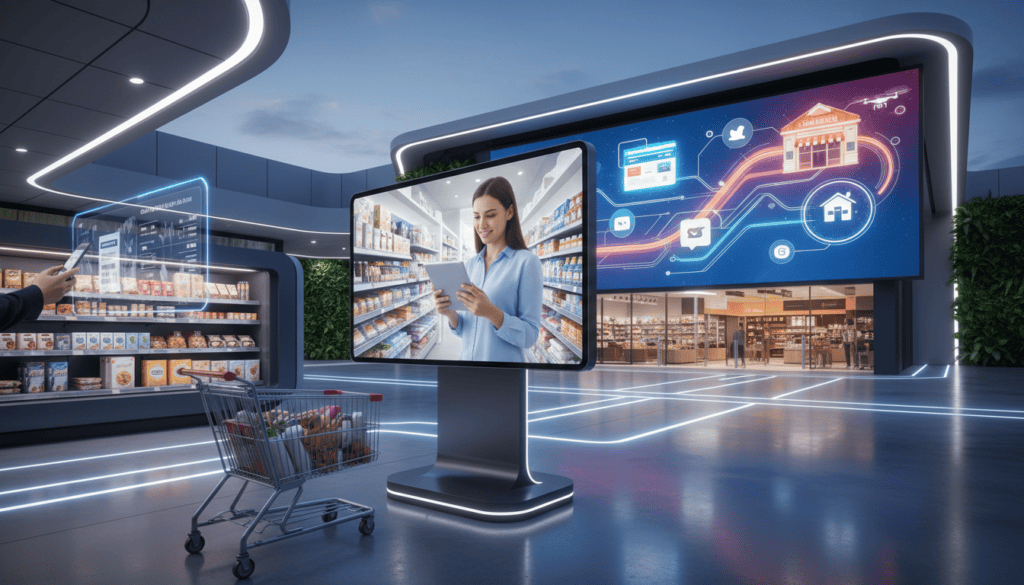
The strongest omnichannel experiences blur the lines between digital and physical shopping. Your online presence should enhance in-store experiences, not replace them.
Effective online-to-offline strategies include:
- Store locators with real-time inventory – Show exactly which locations have products in stock
- Digital coupons for in-store use – Track redemption to measure online campaign effectiveness
- Mobile apps with store maps – Help customers find products quickly in unfamiliar stores
- Click-and-collect services – Let customers order online and pick up at convenient locations
Retail Partner Collaboration
Your retail partners aren’t obstacles to omnichannel success—they’re essential collaborators. The most successful CPG brands work closely with retailers to create win-win situations.
Here’s how to strengthen these partnerships:
Share customer insights – Help retailers understand which products perform best for different customer segments. This data helps them optimize shelf space and promotional strategies.
Provide marketing support – Create co-branded content that drives traffic to retail locations while building your brand awareness.
Support their digital initiatives – Many retailers are building their own omnichannel capabilities. Provide high-quality product information, images, and descriptions for their websites.
Measuring Omnichannel Success
Key Performance Indicators
Traditional metrics like sales by channel miss the bigger picture. Omnichannel success requires metrics that capture cross-channel behavior and customer lifetime value.
Focus on these essential KPIs:
- Customer journey completion rates – How many people who start researching actually make a purchase?
- Cross-channel engagement – What percentage of customers interact with multiple touchpoints?
- Attribution accuracy – Which channels truly drive conversions versus which get credit?
- Customer satisfaction scores – Are seamless experiences improving overall satisfaction?
- Repeat purchase rates – Do omnichannel customers buy more frequently than single-channel customers?
Data Analysis Best Practices
The reality is that omnichannel data gets messy quickly. Customers clear cookies, use different email addresses, and switch between devices. Your analysis needs to account for these realities.
Use probabilistic matching to connect customer behavior across touchpoints when deterministic data isn’t available. Look for patterns rather than perfect attribution. Someone who researches on mobile but buys on desktop is still following a connected journey.

Common Implementation Pitfalls
Technology Before Strategy
Many CPG brands jump straight into technology solutions without clearly defining their omnichannel strategy. This leads to disconnected systems that create more problems than they solve.
Start with customer experience mapping. Understand what seamless looks like from your customers’ perspective, then select technologies that support those experiences.
Internal Silos
Omnichannel selling requires breaking down internal barriers. When your social media team doesn’t talk to your retail partners team, customers feel the disconnect.
Create cross-functional teams responsible for customer journey segments rather than individual channels. This ensures someone owns the complete experience, not just pieces of it.
Future-Proofing Your Omnichannel Strategy
Emerging Channel Considerations
New shopping channels emerge constantly—voice commerce, augmented reality, social selling, and subscription services all create additional touchpoints to consider.
Don’t chase every new channel immediately. Instead, build flexible systems that can integrate new touchpoints without requiring complete overhauls. Focus on maintaining consistent brand experiences regardless of the specific channels involved.
Privacy and Data Regulations
Increasing privacy regulations affect how you collect and use customer data across channels. Build privacy compliance into your omnichannel foundation rather than treating it as an afterthought.
Transparent data practices actually strengthen customer relationships. When people understand how you use their information to improve their experience, they’re more willing to share it.
Taking Action on Omnichannel Integration
Creating seamless shopping experiences isn’t just about technology—it’s about fundamentally rethinking how your brand connects with customers across every touchpoint. The CPG brands that succeed in today’s market are those that break down internal silos, invest in data integration, and consistently deliver value regardless of where customers choose to engage.
Success requires more than good intentions. You need experienced partners who understand both the technical complexities of omnichannel integration and the strategic thinking required to create truly seamless experiences. At Beast Creative Agency, our certified specialists combine AI-enhanced campaign capabilities with radical transparency to help CPG brands build omnichannel strategies that deliver measurable ROI through personalized customer experiences.
Ready to transform your customer journey from fragmented touchpoints into seamless experiences? Let’s discuss how omnichannel selling can drive growth for your CPG brand.