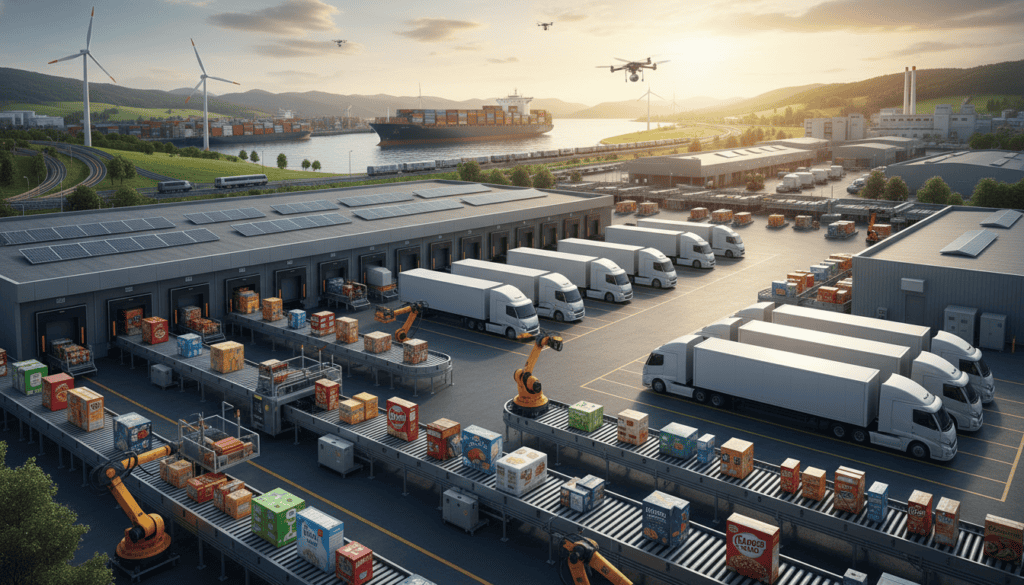
While other business sectors argue about digital transformation, CPG companies are quietly revolutionizing their supply chains with precision engineering that would make aerospace manufacturers envious. The result? Cost reductions of 15-25% and efficiency gains that directly impact bottom-line profitability.

The Current State of CPG Supply Chain Challenges
Companies in the consumer packaged goods industry face unique supply chain pressures that don’t exist in other sectors. You’re dealing with products that have short shelf lives, seasonal demand spikes, and consumers who expect their favorite brands available everywhere, all the time.
Here’s what makes CPG supply chains particularly complex:
- Multiple SKUs across various product lines
- Diverse retail channels from big box stores to convenience shops
- Fluctuating raw material costs
- Regulatory compliance across different markets
- Consumer demand volatility
The reality is that traditional supply chain management approaches can’t keep up with these demands. Companies that stick to outdated methods find themselves with either excess inventory eating into profits or stockouts that damage customer relationships.
Core Components of Effective CPG Supply Chain Management
Demand Forecasting and Planning
Most businesses miss this: accurate demand forecasting isn’t just about looking at last year’s numbers and adding a growth percentage. Modern CPG companies use sophisticated algorithms that factor in everything from weather patterns to social media sentiment.
Here’s what works for demand planning:
- Multi-variable analysis: Combine historical sales data with external factors like economic indicators, competitor actions, and market trends
- Collaborative planning: Include input from sales teams, retail partners, and marketing departments
- Scenario modeling: Prepare for best-case, worst-case, and most-likely scenarios
- Real-time adjustments: Update forecasts monthly or even weekly based on actual performance
The companies getting this right see forecast accuracy improvements of 20-30%, which translates directly to reduced inventory costs and better service levels.
Inventory Optimization Strategies
Here’s the thing about inventory management in CPG: it’s not just about having enough product. You need the right products in the right places at the right time, while minimizing carrying costs and waste.
Smart inventory optimization focuses on these areas:
Safety Stock Calculations
Instead of using blanket safety stock percentages, calculate optimal levels for each SKU based on:
- Demand variability
- Supply lead times
- Service level targets
- Product margins
ABC Analysis Implementation
Not all products deserve the same attention. Classify your inventory:
- A items: High-value products requiring tight control (usually 20% of SKUs, 80% of value)
- B items: Moderate-value products with standard controls
- C items: Low-value products with simplified management
Supplier Relationship Management
Your suppliers aren’t just vendors—they’re partners in your success. The best CPG companies treat supplier relationships as strategic assets that require ongoing investment and attention.
This might surprise you: companies with strong supplier partnerships see 12% lower procurement costs and 50% fewer supply disruptions compared to those with transactional relationships.
Supplier Performance Metrics
Track these key performance indicators:
- On-time delivery rates
- Quality scores and defect rates
- Price competitiveness
- Responsiveness to issues
- Innovation contributions
Risk Management and Diversification
Don’t put all your eggs in one basket. Develop backup suppliers for critical materials and consider geographic diversification to reduce risk from natural disasters, political instability, or transportation disruptions.

Technology Solutions Driving CPG Supply Chain Excellence
Advanced Analytics and AI
Artificial intelligence isn’t just a buzzword in supply chain management—it’s delivering measurable results. AI-powered systems can process massive amounts of data to identify patterns humans might miss.
Here’s where AI makes the biggest impact:
- Predictive maintenance: Prevent equipment failures before they happen
- Dynamic pricing optimization: Adjust prices based on demand, competition, and inventory levels
- Route optimization: Find the most efficient delivery paths considering traffic, weather, and fuel costs
- Quality control: Use machine learning to detect defects faster and more accurately than human inspectors
Internet of Things (IoT) Integration
IoT devices provide real-time visibility into your supply chain operations. Think beyond just tracking shipments—modern IoT solutions monitor:
- Temperature and humidity during transport (critical for food and beverage CPG)
- Equipment performance in manufacturing facilities
- Inventory levels in warehouses and retail locations
- Energy usage for sustainability reporting
Cloud-Based Supply Chain Platforms
Cloud technology enables better collaboration with partners and provides the scalability CPG companies need. Modern platforms offer:
- Real-time data sharing with suppliers and retailers
- Integrated planning and execution capabilities
- Mobile access for field teams
- Automatic software updates and security patches
Cost Reduction Strategies That Actually Work
Transportation Cost Optimization
Transportation typically represents 6-12% of total product cost for CPG companies. Small improvements here have big impacts on profitability.
Most effective cost reduction tactics:
Network Optimization
Regularly evaluate your distribution network to ensure optimal placement and channel strategy. Are your warehouses in the right locations? Could you consolidate facilities without impacting service levels? Use modeling software to test different scenarios.
Load Consolidation
Maximize truck utilization by:
- Combining shipments to nearby customers
- Coordinating with suppliers for inbound consolidation
- Using cross-docking to reduce handling
Carrier Partnership Programs
Instead of always choosing the lowest bid, develop partnerships with reliable carriers. Offer consistent volume in exchange for better rates and priority service.
Manufacturing Efficiency Improvements
The reality is that small changes in manufacturing processes can yield significant cost savings when multiplied across thousands or millions of units.
Lean Manufacturing Principles
Focus on eliminating waste in all forms:
- Overproduction: Make only what’s needed when it’s needed
- Waiting: Minimize downtime between operations
- Transportation: Reduce unnecessary movement of materials
- Inventory: Keep work-in-process to minimum levels
- Defects: Build quality into the process rather than inspecting it in
Preventive Maintenance Programs
Unplanned downtime costs CPG manufacturers an average of $50,000 per hour. Preventive maintenance programs typically cost 3-5 times less than reactive repairs.
Working Capital Optimization
Here’s what works for managing cash flow while maintaining operational efficiency:
Payment Terms Optimization
- Negotiate extended payment terms with suppliers
- Offer early payment discounts to customers
- Use supply chain financing programs
Inventory Turns Improvement
Faster inventory turns free up cash for other investments. Target improvements through:
- Better demand forecasting
- Reduced lead times
- Improved product mix management
- More frequent, smaller deliveries

Measuring Success: Key Performance Indicators
You can’t manage what you don’t measure. The best CPG companies track these essential metrics:
Operational Metrics
- Perfect Order Rate: Percentage of orders delivered complete, on-time, damage-free, and with correct documentation
- Inventory Turnover: How many times inventory is sold and replaced over a period
- Order Cycle Time: Average time from order placement to delivery
- Capacity Utilization: How effectively you’re using manufacturing and warehouse capacity
Financial Metrics
- Total Supply Chain Costs: All costs as a percentage of revenue
- Cost per Unit: Complete cost to produce and deliver one unit
- Working Capital: Cash tied up in inventory and receivables
- Return on Assets: How efficiently assets generate profit
Customer Service Metrics
- Fill Rate: Percentage of customer demand met from available inventory
- On-Time Delivery: Percentage of shipments delivered when promised
- Customer Complaint Rate: Supply chain-related complaints as percentage of orders
Future-Proofing Your CPG Supply Chain
Sustainability Integration
Consumers increasingly choose brands based on environmental responsibility. Implementing sustainable supply chain practices isn’t just good for the planet—it’s a strategic business advantage that resonates with modern consumers.
Focus areas for sustainable operations:
- Packaging reduction and recyclability
- Energy-efficient transportation and facilities
- Waste reduction in manufacturing
- Sustainable sourcing of raw materials
- Water conservation programs
Supply Chain Resilience
Recent global disruptions have shown the importance of building resilient supply chains that can adapt to unexpected challenges.
Build resilience through:
- Supplier diversification: Multiple sources for critical materials
- Geographic distribution: Manufacturing and distribution in different regions
- Flexible capacity: Ability to scale up or down quickly
- Risk assessment: Regular evaluation of potential disruption scenarios
- Contingency planning: Detailed response plans for various disruption types
Digital Supply Chain Evolution
The future of CPG supply chains is increasingly digital. Companies investing in digital transformation now will have significant advantages over competitors.
Key digital trends to watch:
- Blockchain for supply chain transparency
- Autonomous vehicles for last-mile delivery
- Robotic process automation in warehouses
- Digital twins for supply chain modeling
- 5G connectivity for real-time data sharing
Conclusion: Building Your Competitive Advantage
Effective CPG supply chain management isn’t just about moving products from point A to point B—it’s about creating a competitive advantage that drives profitability and customer satisfaction. The companies that excel combine strategic thinking with operational excellence, using technology to amplify human decision-making rather than replace it.
Success requires a holistic approach that balances cost optimization with service excellence, efficiency with resilience, and automation with flexibility. Start with the fundamentals—demand forecasting based on consumer behavior analysis, inventory optimization, and supplier partnerships—then gradually incorporate advanced technologies as your capabilities mature.
The investment in supply chain optimization pays dividends quickly. Most CPG companies see positive ROI within 6-12 months, with benefits compounding over time as processes mature and teams develop expertise.
At Beast Creative Agency, we understand that supply chain excellence requires more than just operational improvements—it demands strategic marketing to communicate your competitive advantages to customers and partners. Our AI-enhanced campaigns help CPG companies showcase their reliability, sustainability, and innovation to drive brand preference and business growth.