Procter & Gamble’s direct sales jumped 50% in just three years, while traditional CPG giants watched retail shelf space shrink. This seismic shift from store-dependent strategies to direct-to-consumer dominance has rewritten every marketing playbook. Smart CPG brands aren’t just adapting—they’re thriving by mastering omnichannel approaches that traditional retail never demanded.

The Death of the Single-Channel CPG Strategy
For decades, CPG marketing followed a predictable formula: create a product, pitch it to retailers, secure shelf space, and run mass media campaigns hoping consumers would find it in stores. This linear approach worked when consumers had limited options and retailers controlled the entire customer journey.
Those days are gone. Today’s consumers research products on Instagram, read reviews on Amazon, compare prices across multiple platforms, and might end up purchasing directly from the brand’s website—all before ever stepping foot in a physical store.
The numbers tell the story. Direct-to-consumer sales in the CPG sector reached $129 billion in 2023, representing a 300% increase from pre-pandemic levels. Meanwhile, traditional retail foot traffic continues declining, with many categories seeing 15-20% drops in physical store visits.
Why Traditional Retail Marketing No Longer Works Alone
Consumer Behavior Has Fundamentally Changed
Modern shoppers don’t follow the old purchase funnel. They might discover a product through a TikTok video, research it on the brand’s website, read reviews on multiple platforms, and then decide to subscribe for monthly deliveries. This non-linear journey requires a completely different marketing approach.
Here’s what’s driving this change:
- Information accessibility: Consumers can research any product instantly, comparing ingredients, prices, and reviews across dozens of sources
- Convenience expectations: Same-day delivery and subscription services have raised the bar for purchase convenience
- Personalization demands: Shoppers expect tailored recommendations and customized products, something traditional retail couldn’t deliver
- Brand connection desires: Consumers want to support brands that align with their values, requiring direct brand-to-consumer communication
Retail Consolidation and Margin Pressure
As major retailers consolidate and demand better terms, CPG brands face shrinking margins and reduced shelf space. The power dynamic that once favored large retailers is shifting as brands discover they can reach consumers directly and keep more profit per sale.
This shift becomes even more critical when you consider that Amazon alone now controls over 40% of all e-commerce sales. Relying solely on traditional retail means competing in an increasingly crowded and margin-compressed environment.
The Rise of Direct-to-Consumer CPG Marketing
Direct-to-consumer isn’t just another sales channel—it’s a complete reimagining of how CPG brands connect with their customers. When brands sell directly, they own the entire customer experience and, more importantly, the customer data.
Data Ownership Changes Everything
Traditional retail kept CPG brands in the dark about their customers. Brands knew what retailers ordered but had little insight into who actually bought their products, when, or why. DTC changes this completely.
With direct sales, brands can track:
- Individual customer purchase patterns and preferences
- Which marketing channels drive the most valuable customers
- Customer lifetime value and retention rates
- Real-time feedback on new products and features
- Detailed demographic and psychographic customer profiles
This data becomes the foundation for more effective marketing campaigns, better product development, and stronger customer relationships.
Subscription Models Transform Customer Relationships
Many CPG brands have discovered that subscription models don’t just provide predictable revenue—they create stronger customer bonds. When customers subscribe to receive products regularly, brands can focus on retention and upselling rather than constantly acquiring new customers.
Dollar Shave Club pioneered this approach, turning a commodity product (razors) into a subscription service with personality and customer loyalty. Their success proved that even traditional CPG products could thrive with DTC models.

Building an Effective Omnichannel CPG Strategy
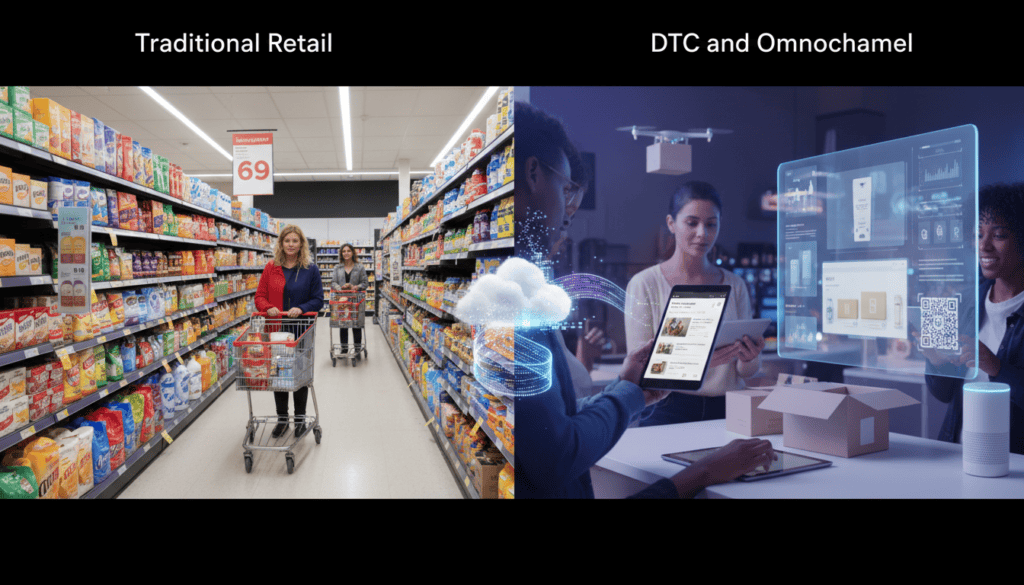
The most successful CPG brands today don’t choose between traditional retail and DTC—they master both. This omnichannel approach requires coordination across multiple touchpoints and a deep understanding of how customers move between channels.
Channel Integration, Not Channel Competition
Smart CPG brands treat their different channels as complementary rather than competitive. A customer might discover a product in a physical store, research it online, and then set up a subscription for future purchases. Each touchpoint serves a purpose in the customer journey.
Here’s how leading brands coordinate their channels:
- Consistent messaging: Whether customers encounter the brand in-store, online, or through social media, they receive consistent value propositions and brand personality
- Cross-channel promotions: In-store purchases can lead to online subscriptions, while digital customers receive samples to try new products
- Unified customer data: Purchase behavior across all channels feeds into a single customer profile for better personalization
- Flexible fulfillment: Customers can choose how they want to receive products, whether through retail pickup, home delivery, or subscription
Content Marketing Becomes Product Marketing
Traditional CPG marketing relied heavily on paid advertising to drive awareness. Modern omnichannel strategies use content marketing to educate, engage, and build relationships with customers across all touchpoints.
This content serves multiple purposes:
- Educational content helps customers understand product benefits and usage
- Behind-the-scenes content builds brand authenticity and trust
- User-generated content provides social proof across all channels
- How-to content positions the brand as an expert in their category
The key is creating content that works across channels—a video recipe featuring your food product works on social media, your website, and can even be displayed in retail locations.
Technology That Powers Modern CPG Marketing
Customer Data Platforms (CDPs)
Managing customer relationships across multiple channels requires sophisticated technology. Customer Data Platforms collect and unify customer information from all touchpoints, creating single customer views that inform marketing decisions.
These platforms help CPG brands:
- Track customer journeys across online and offline touchpoints
- Personalize marketing messages based on purchase history and preferences
- Identify the most valuable customers for retention efforts
- Optimize marketing spend by understanding which channels drive results
AI-Enhanced Personalization
Artificial intelligence has become essential for delivering personalized experiences at scale. AI can analyze customer behavior patterns, predict future purchases, and recommend products in real-time across all channels.
For CPG brands, AI enables:
- Dynamic product recommendations based on purchase history
- Predictive inventory management to ensure product availability
- Automated email marketing that responds to customer behavior
- Price optimization across different channels and customer segments
Measuring Success in the New CPG Landscape
Traditional CPG success metrics focused on retail metrics like distribution points and shelf turns. Modern CPG marketing requires a more sophisticated approach to measurement that accounts for customer lifetime value and cross-channel behavior.
Customer Lifetime Value Over Transaction Volume
While traditional retail focused on moving units, DTC and omnichannel strategies prioritize customer lifetime value. A customer who purchases once directly from your website might be worth 5x more than a one-time retail customer if they become a subscriber and advocate for your brand.
Key metrics for modern CPG brands include:
- Customer acquisition cost across different channels
- Customer lifetime value by channel and customer segment
- Retention rates and subscription renewal rates
- Cross-channel customer behavior and attribution
- Brand awareness and sentiment across touchpoints
Attribution in a Multi-Touch World
When customers interact with your brand across multiple channels before purchasing, traditional last-click attribution doesn’t tell the whole story. Modern CPG brands use multi-touch attribution models to understand how different channels work together to drive conversions.
This might reveal that social media drives awareness, email nurtures consideration, and retail locations close the sale. Understanding these patterns helps optimize marketing spend across all channels.

Common Pitfalls in CPG Marketing Transformation
Treating DTC as Just Another Retail Channel
Many CPG brands make the mistake of approaching direct-to-consumer sales like traditional retail—focusing on individual transactions rather than customer relationships. This misses the biggest opportunity of DTC: building direct relationships with customers.
DTC success requires a mindset shift from selling products to serving customers. This means investing in customer service, creating engaging post-purchase experiences, and using customer data to improve products and services continuously.
Inconsistent Brand Experience Across Channels
Customers expect consistent experiences whether they encounter your brand in a store, on your website, or through social media. Inconsistent messaging, different product offerings, or varying customer service quality across channels can confuse customers and damage brand trust.
Successful omnichannel brands invest in brand guidelines, employee training, and systems that ensure consistent experiences across all touchpoints.
The Future of CPG Marketing
The transformation from traditional retail to DTC and omnichannel is still accelerating. Several trends will shape the next phase of CPG marketing evolution:
Retail Media Networks
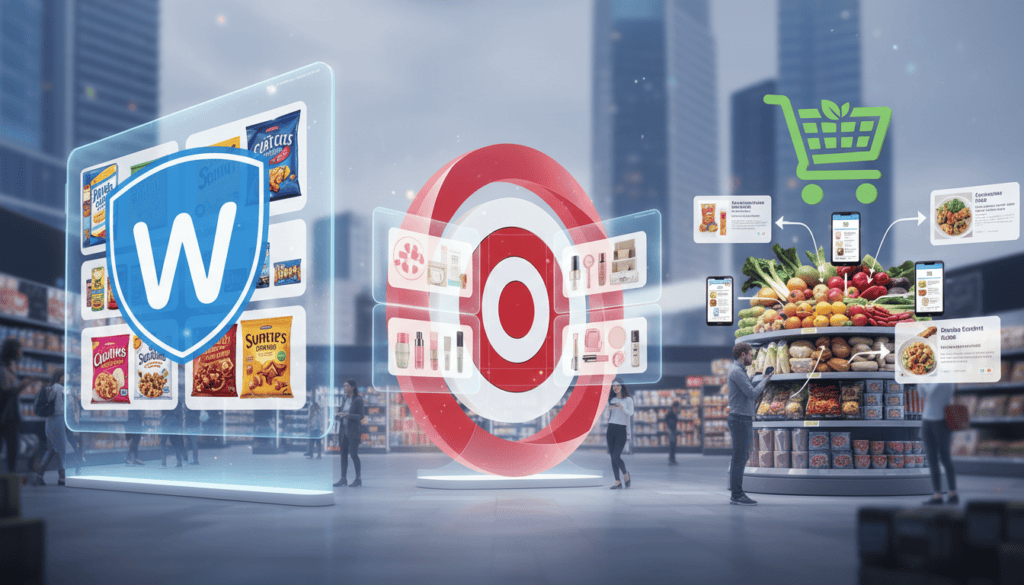
Major retailers like Amazon, Walmart, and Target are building advertising platforms that let CPG brands target customers directly within the retail environment. These retail media networks combine the reach of traditional retail with the targeting capabilities of digital advertising.
Social Commerce Integration
Social media platforms continue expanding their shopping capabilities, allowing customers to discover and purchase products without leaving the platform. CPG brands must optimize their presence and advertising for these social commerce experiences.
Sustainability and Transparency
Modern consumers, especially younger demographics, increasingly choose brands based on sustainability practices and supply chain transparency. DTC channels give CPG brands the opportunity to communicate these values directly to customers.
The most successful CPG brands will continue evolving their marketing strategies to meet changing consumer expectations while using technology to deliver personalized, convenient, and meaningful experiences across all channels.
Transform Your CPG Marketing Strategy
The shift from traditional retail to DTC and omnichannel marketing isn’t optional—it’s essential for CPG brands that want to thrive in today’s competitive landscape. Success requires the right strategy, technology, and expertise to coordinate customer experiences across multiple touchpoints.
At Beast Creative Agency, we help CPG brands navigate this transformation with AI-enhanced campaigns and personalized strategies that drive real ROI. If you’re evaluating partners, our guide on choosing the right CPG marketing agency covers everything from evaluating expertise to understanding pricing models. Our certified specialists understand how to build omnichannel experiences that turn customers into advocates and transactions into relationships. Ready to transform your CPG marketing strategy? Let’s discuss how our radical transparency and proven expertise can accelerate your growth across all channels.