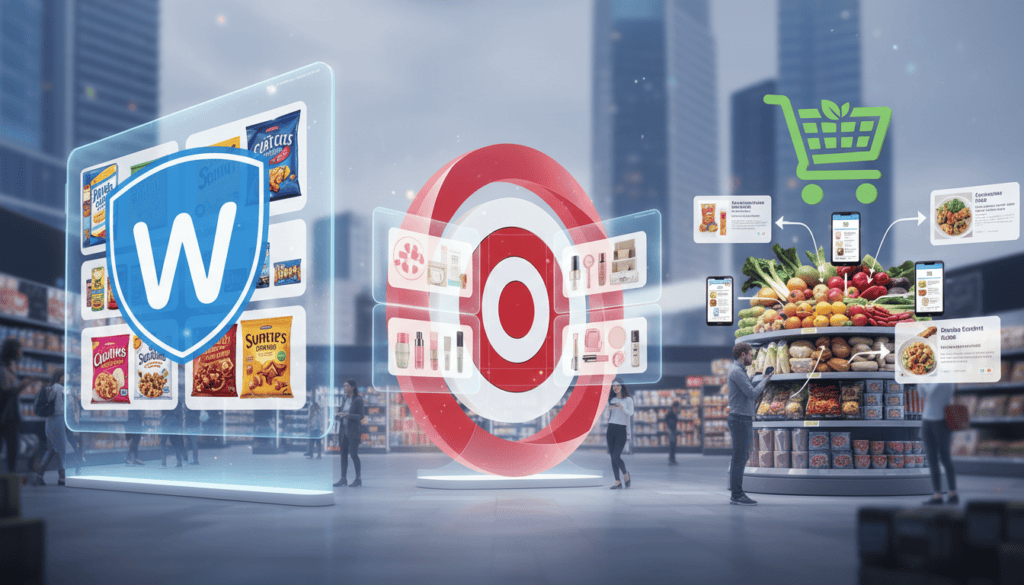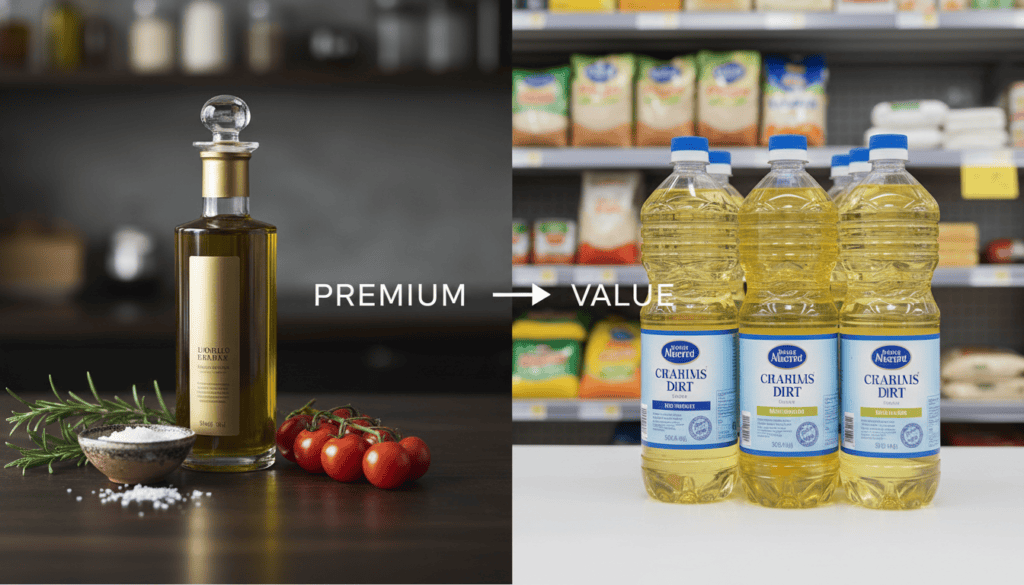
Coca-Cola commands $4.50 for a premium glass bottle while store brands sell similar cola for $0.89. Both strategies work, but they require fundamentally different approaches to succeed. The choice between premium and value positioning in consumer packaged goods isn’t just about price—it’s about building an entire brand ecosystem that supports your chosen market position.

Understanding CPG Market Positioning Fundamentals
Consumer packaged goods positioning sits on a spectrum, but most successful brands cluster around two distinct poles: premium positioning that emphasizes quality, exclusivity, and experience, or value positioning that focuses on affordability, accessibility, and practical benefits.
Here’s what many business owners miss: positioning isn’t just a marketing decision—it’s a business model choice that affects everything from product development to supply chain management. Your positioning determines which customers you’ll attract, how much you can charge, and what marketing messages will resonate.
The Premium Positioning Model
Premium CPG brands don’t just charge more—they create perceived value that justifies higher prices. Think about brands like Method cleaning products, which transformed boring household cleaners into design objects worth displaying on kitchen counters.
Premium positioning works through several key mechanisms:
- Quality signaling: Higher prices often signal better quality in consumers’ minds
- Exclusivity appeal: Limited availability or higher prices create desirability
- Identity alignment: Consumers use premium brands to express personal values or status
- Experience enhancement: Premium packaging and presentation elevate the user experience
The Value Positioning Advantage
Value positioning isn’t about being cheap—it’s about being smart. Successful value brands like Kirkland Signature or Great Value focus on delivering essential benefits without unnecessary frills.
Value brands succeed by:
- Cost efficiency: Streamlined operations and smart sourcing keep prices low
- Mass appeal: Broader customer base drives volume sales
- Practical benefits: Clear, functional value propositions
- Market penetration: Lower prices enable faster market share growth
Pricing Strategy Implications
Your positioning choice fundamentally shapes your pricing strategy. Here’s how each approach affects your pricing decisions:
Premium Pricing Strategies
Premium CPG brands can’t just set high prices and hope for the best. They need pricing strategies that reinforce their positioning while maximizing profitability.
Psychological Pricing: Premium brands often use charm pricing (ending in .99) less frequently, instead opting for round numbers that feel more premium. A $5.00 product feels more premium than $4.99 in many categories.
Tiered Pricing: Offering good-better-best options helps premium brands capture different customer segments while maintaining their high-end positioning. The premium tier anchors perceptions of the entire line.
Limited Edition Pricing: Seasonal or limited releases allow premium brands to test higher price points and create urgency. This strategy works particularly well in food and beverage categories.
Value Pricing Approaches
Value brands need pricing strategies that emphasize savings while maintaining profitability through volume.
Competitive Parity: Many value brands price at or slightly below category leaders, then compete on features or benefits rather than price alone.
Penetration Pricing: Launching at very low prices to quickly gain market share, then gradually increasing prices as the brand establishes itself.
Bundle Pricing: Offering multiple products together at a discount encourages larger basket sizes and increases customer lifetime value.

Marketing Strategy Differences
The marketing implications of your positioning choice extend far beyond advertising copy. Each approach requires different channels, messages, and measurement strategies.
Premium Brand Marketing
Premium CPG marketing focuses on building desire and reinforcing quality perceptions. This might surprise you: premium brands often spend less on traditional advertising but invest heavily in experiential marketing and influencer partnerships.
Channel Strategy: Premium brands prioritize selective distribution through higher-end retailers. Being available everywhere can actually hurt premium positioning—scarcity drives desirability.
Content Marketing: Premium brands invest in storytelling that connects products to lifestyle aspirations. They share origin stories, production processes, and brand values that justify premium pricing.
Visual Identity: Premium packaging and visual design become marketing tools themselves. Every touchpoint must reinforce quality perceptions.
Value Brand Marketing
Value brand marketing emphasizes accessibility, practicality, and smart choices. The most successful value brands avoid looking “cheap” while clearly communicating savings.
Distribution Strategy: Value brands succeed through wide availability and strong relationships with mass retailers. Convenience drives purchase decisions.
Performance Marketing: Value brands often rely more heavily on measurable, direct-response marketing channels that can demonstrate clear ROI at lower customer acquisition costs.
Comparison Messaging: Value brands benefit from direct comparisons that highlight equivalent quality at lower prices, though this must be done carefully to avoid appearing defensive.
Brand Building Considerations
Here’s the thing: both premium and value positioning can build strong brands, but they require different approaches to brand building.
Premium Brand Development
Premium CPG brands build equity through exclusivity and aspiration. They create communities around shared values and lifestyle choices.
Brand building focuses on:
- Emotional connections: Premium brands invest in creating emotional relationships that transcend functional benefits
- Consistency: Every interaction must reinforce premium positioning—one off-brand experience can damage carefully built perceptions
- Innovation leadership: Premium brands often introduce new features or categories that justify their price premium
Value Brand Equity
Value brands build trust through reliability and consistency. Customers develop loyalty when value brands consistently deliver on their promises.
Value brand building emphasizes:
- Reliability: Consistent quality and availability build trust over time
- Transparency: Clear communication about value propositions and honest marketing messages
- Category authority: Becoming the go-to choice for practical, budget-conscious consumers
Market Research and Consumer Insights
Different positioning strategies require different approaches to understanding your market and customers.
Premium Market Research
Premium brands need deep insights into customer motivations, aspirations, and decision-making processes. Quantitative data tells you what’s happening, but qualitative research reveals why customers choose premium options.
Focus on researching:
- Emotional drivers behind purchase decisions
- Lifestyle and value alignments
- Price sensitivity thresholds
- Competitive comparison behaviors
Value Market Analysis
Value brands benefit from clear understanding of functional needs, purchase patterns, and price sensitivity across different customer segments.
Key research areas include:
- Price elasticity analysis
- Feature importance rankings
- Shopping behavior patterns
- Category switching triggers

Operational and Supply Chain Implications
Most businesses underestimate how positioning affects operations. Your market position determines everything from supplier relationships to inventory management.
Premium Operations
Premium brands often accept higher costs to maintain quality standards and brand perception. This includes:
- Premium ingredient sourcing and supplier partnerships
- Smaller production runs to maintain exclusivity
- Enhanced packaging and presentation requirements
- Quality control processes that exceed industry standards
Value Operations
Value brands optimize for efficiency and cost control while maintaining acceptable quality levels:
- Streamlined product lines to maximize production efficiency
- Strategic supplier partnerships focused on cost optimization
- Packaging designs that minimize costs while protecting products
- Inventory management systems that reduce carrying costs
Measuring Success
Premium and value positioned brands require different metrics to measure success effectively.
Premium Brand Metrics
Premium brands should focus on metrics that reflect their positioning:
- Price premium maintenance: Tracking price gaps versus competitors
- Brand equity measures: Awareness, consideration, and preference metrics
- Customer lifetime value: Premium customers should generate more long-term value
- Net Promoter Score: Premium brands should generate stronger advocacy
Value Brand Success Indicators
Value brands should track metrics that reflect efficiency and market penetration:
- Market share growth: Value brands should gain share over time
- Distribution expansion: Availability across retail channels
- Cost per acquisition: Efficient customer acquisition is crucial for value brands
- Repeat purchase rates: Value brands rely on consistent customer retention
Avoiding Positioning Pitfalls
The reality is that many CPG brands fail because they try to straddle both positions or change positioning without understanding the implications.
The Middle Market Trap
Brands stuck in the middle—not premium enough to justify high prices, not value-oriented enough to compete on price—often struggle to maintain market share. This “middle market” position requires exceptional execution to succeed.
Positioning Migration Challenges
Moving from value to premium positioning is extremely difficult. Customers resist paying more for brands they perceive as budget options. Moving from premium to value can damage brand equity permanently.
Consistency Requirements
Whatever positioning you choose, consistency across all touchpoints is essential. Mixed messages confuse customers and weaken your market position.
The most successful CPG brands choose their positioning deliberately and align every business decision to support that choice. Whether you’re building a premium brand that commands higher prices or a value brand that wins through efficiency, success comes from complete commitment to your chosen strategy.
Your positioning decision affects everything from product development to customer service. It determines which customers you’ll attract, how you’ll compete, and what success looks like for your brand. The brands that win are those that understand these implications and build business models that support their positioning choice.
At Beast Creative Agency, we help CPG brands develop positioning strategies that align with their business goals and market realities. Our AI-enhanced campaigns and data-driven approach ensure your positioning translates into measurable business results. Ready to clarify your brand’s market position and develop marketing strategies that drive growth?