Consumer packaged goods revenue reached $2.2 trillion globally in 2023, yet most CPG companies struggle with one fundamental decision: should they build their own brand or create private label products? This choice shapes every marketing dollar you’ll spend and determines whether you’re competing on brand loyalty or shelf space.

Understanding the CPG Landscape: Two Distinct Paths
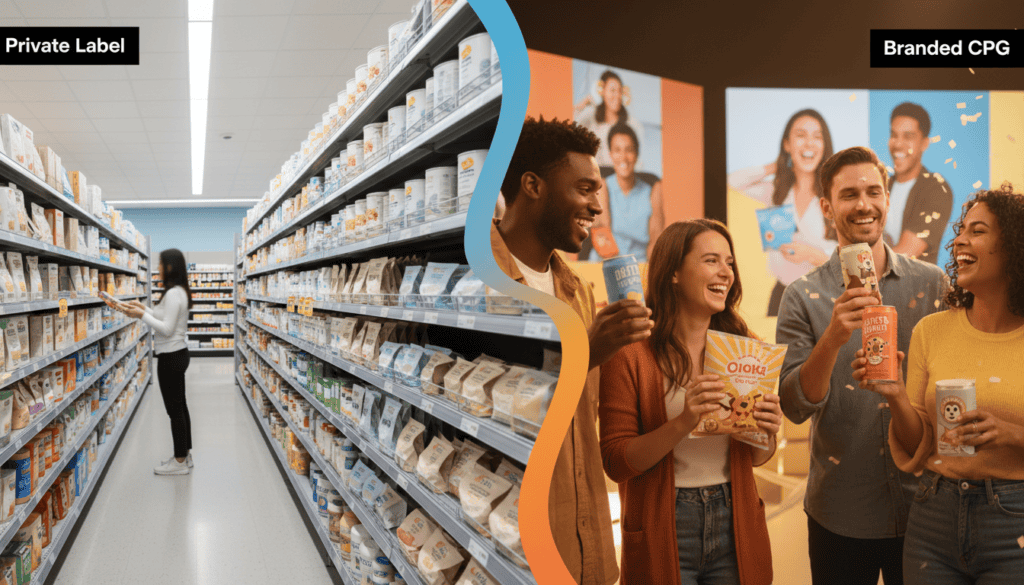
The consumer packaged goods industry operates on two primary business models, each requiring completely different marketing approaches. Branded CPG companies invest heavily in consumer recognition, emotional connection, and premium positioning. Private label manufacturers focus on retailer relationships, cost efficiency, and meeting specific market gaps.
Here’s the thing: both approaches can be incredibly profitable, but they demand different expertise, resources, and long-term strategies. Most businesses fail because they try to blend these approaches instead of committing fully to one path.
The Branded CPG Model
Branded CPG companies own their destiny through direct consumer relationships. They control messaging, pricing strategies, and brand perception. Think of companies like Unilever, Procter & Gamble, or smaller success stories like Dollar Shave Club before their acquisition.
These companies invest 10-15% of revenue in marketing because they’re building long-term brand equity. Every marketing campaign serves dual purposes: driving immediate sales and strengthening brand recognition for future purchases.
The Private Label Model
Private label manufacturers operate behind the scenes, creating products that retailers sell under their own brands. Target’s Goodfellow & Co., Costco’s Kirkland Signature, and Amazon’s AmazonBasics all represent private label partnerships.
These companies typically spend 2-5% of revenue on marketing, focusing primarily on B2B relationship building rather than consumer awareness. Their success depends on operational excellence and retailer satisfaction.
Marketing Strategies for Branded CPG Companies
Branded CPG marketing centers on building consumer preference and driving purchase decisions at the point of sale. You’re not just selling a product; you’re selling an experience, a lifestyle, or a solution to a specific problem.
Brand Building and Emotional Connection
Successful branded CPG companies create emotional connections that transcend product features. Nike doesn’t sell shoes; they sell athletic achievement. Dove doesn’t sell soap; they sell self-confidence and real beauty.
Your marketing strategy should include:
- Storytelling campaigns that connect with consumer values
- Consistent visual identity across all touchpoints
- Influencer partnerships that align with brand personality
- User-generated content that builds community
- Cause marketing that demonstrates corporate values
Multi-Channel Consumer Acquisition
Branded CPG companies must reach consumers wherever they make purchasing decisions. This might surprise you: the average consumer sees your product 7-12 times before making their first purchase.
Essential channels include:
- Digital advertising: Facebook, Instagram, and Google ads targeting specific demographics
- Content marketing: Blogs, videos, and educational content that provide value
- Retail partnerships: Co-op advertising and in-store promotional support
- PR and earned media: Product reviews, media coverage, and industry recognition
- Email marketing: Direct communication with existing customers
Premium Positioning and Value Communication
Branded products typically command higher prices than private label alternatives. Your marketing must justify this premium through clear value propositions.
Focus on:
- Product innovation and unique features
- Quality certifications and testing results
- Brand heritage and company story
- Customer testimonials and reviews
- Warranty and customer service superiority
Data-Driven Personalization
Modern CPG brands use customer data to create personalized experiences. Amazon’s recommendation engine, Spotify’s playlists, and Netflix’s content suggestions demonstrate how personalization drives engagement and sales.
Key personalization strategies:
- Segmented email campaigns based on purchase history
- Dynamic website content that adapts to visitor behavior
- Personalized product recommendations
- Customized social media advertising
- Loyalty programs with individualized rewards

Marketing Strategies for Private Label CPG Companies
Private label success depends on retailer relationships and operational excellence. Your marketing efforts focus on B2B sales, supply chain capabilities, and demonstrating value to retail partners.
Retailer Relationship Marketing
Your primary customers are buyers at major retailers, not end consumers. These professionals make decisions based on data, profit margins, and risk management.
Effective B2B marketing includes:
- Trade show participation and industry networking
- Case studies demonstrating successful partnerships
- Category management expertise and support
- Supply chain transparency and reliability metrics
- Co-innovation opportunities for new products
Operational Excellence Communication
Retailers choose private label partners based on capability, not creativity. Your marketing materials should emphasize:
- Manufacturing capacity: Production volume and scalability
- Quality certifications: FDA, ISO, and industry-specific standards
- Supply chain reliability: On-time delivery and inventory management
- Cost competitiveness: Pricing models and cost reduction capabilities
- Innovation support: R&D capabilities and new product development
Category Expertise and Insights
The best private label partners become strategic advisors to their retail clients. They provide market insights, trend analysis, and category optimization recommendations.
Develop expertise in:
- Consumer behavior trends within your categories
- Competitive landscape analysis
- Pricing optimization strategies
- Product assortment recommendations
- Seasonal demand forecasting
Regulatory Compliance and Risk Management
Retailers face significant liability when selling private label products. Your marketing should emphasize risk mitigation and compliance expertise.
Key areas to highlight:
- Product liability insurance and coverage
- Regulatory compliance documentation
- Quality control processes and testing
- Recall procedures and crisis management
- Ingredient sourcing and traceability
Hybrid Approaches and Market Considerations
Some companies successfully operate both models simultaneously, but this requires careful resource allocation and distinct operational teams.
When to Consider a Hybrid Model
A hybrid approach makes sense when:
- You have excess manufacturing capacity
- Your brand covers only premium market segments
- Retailers specifically request private label partnerships
- You want to diversify revenue streams
- Your brand faces seasonal demand fluctuations
Managing Potential Conflicts
The reality is that hybrid models create inherent conflicts. Your branded products compete directly with your private label offerings on retailer shelves.
Successful hybrid companies address this through:
- Clear product differentiation strategies
- Separate sales teams for each business model
- Transparent communication with retail partners
- Different distribution channels when possible
- Distinct marketing messages and positioning
Measuring Success: Different Metrics for Different Models
Success metrics vary significantly between branded and private label approaches.
Branded CPG Key Performance Indicators
- Brand awareness: Unaided and aided brand recognition
- Market share: Category penetration and growth
- Customer lifetime value: Long-term revenue per customer
- Net promoter score: Customer satisfaction and advocacy
- Price premium: Pricing power versus competitors
Private Label Success Metrics
- Retailer retention: Long-term partnership duration
- Volume growth: Production capacity utilization
- Operational efficiency: Cost per unit and margin improvement
- Quality metrics: Defect rates and customer complaints
- Category expansion: New product launches and retailer adoption

Technology and Innovation in CPG Marketing
Modern CPG marketing relies heavily on technology and data analytics, regardless of your business model.
AI-Enhanced Campaign Optimization
Artificial intelligence transforms how CPG companies understand consumer behavior and optimize marketing spend. Machine learning algorithms analyze purchase patterns, predict demand fluctuations, and identify the most effective marketing channels.
Practical AI applications include:
- Predictive analytics for inventory management
- Dynamic pricing optimization
- Personalized product recommendations
- Automated A/B testing for ad creative
- Sentiment analysis of customer feedback
Data Integration and Analytics
Successful CPG companies integrate data from multiple sources to create complete customer profiles and optimize marketing performance.
Essential data sources:
- Point-of-sale data from retail partners
- Digital marketing platform analytics
- Customer service interactions and feedback
- Social media engagement metrics
- Market research and consumer surveys
Future Trends in CPG Marketing
The CPG industry continues evolving rapidly, driven by changing consumer expectations and technological advancement.
Sustainability and Transparency
Consumers increasingly demand environmental responsibility and supply chain transparency. Both branded and private label companies must adapt their marketing strategies accordingly.
Key trends include:
- Sustainable packaging and materials
- Carbon footprint reduction and reporting
- Ethical sourcing certifications
- Ingredient transparency and clean labeling
- Circular economy initiatives
Direct-to-Consumer Integration
Even traditional CPG companies are developing direct-to-consumer capabilities to build stronger customer relationships and gather better data.
D2C strategies complement traditional retail through:
- Subscription-based repeat purchases
- Limited edition and exclusive products
- Enhanced customer data collection
- Direct feedback and product development insights
- Higher margin sales channels
Conclusion: Choosing Your Path Forward
The choice between branded and private label CPG approaches isn’t just about products—it’s about building a business model that aligns with your resources, expertise, and long-term goals. Branded companies invest in consumer relationships and emotional connections, while private label manufacturers focus on operational excellence and retailer partnerships.
Here’s what works: commit fully to your chosen approach. Half-hearted brand building fails against established competitors, and unreliable private label partners lose retailer trust quickly. Success requires focused execution and continuous optimization based on clear performance metrics.
The most successful CPG companies, regardless of their model, share common traits: they understand their customers deeply, use data to drive decisions, and adapt quickly to market changes. They also recognize that great marketing isn’t just about creative campaigns—it’s about building sustainable competitive advantages through consistent value delivery.
If you’re ready to develop a marketing strategy that aligns with your CPG business model and drives measurable results, Beast Creative Agency’s certified specialists can help you build campaigns that combine strategic thinking with AI-enhanced optimization. Our radical transparency approach ensures you always understand what’s working and why, maximizing your ROI while building long-term business value.