The CPG industry is experiencing its most dramatic transformation in decades, with 73% of consumers fundamentally changing how they discover and purchase packaged goods since 2020. Traditional marketing funnels no longer capture the complexity of modern buying behavior, where social media influences breakfast cereal choices and AI-powered recommendations drive impulse purchases.

The Evolution of CPG Consumer Behavior
Consumer packaged goods companies face a radically different marketplace than even five years ago. The linear path from awareness to purchase has been replaced by a dynamic, multi-touchpoint journey that weaves through digital and physical channels seamlessly.
Today’s CPG shoppers don’t just buy products—they build relationships with brands across multiple platforms. They might discover a new snack brand through a TikTok video, research ingredients on the company website, read reviews on Amazon, and finally purchase at their local grocery store—a perfect example of why brands need an omnichannel approach that connects retail, DTC, and online marketplaces. This interconnected journey requires brands to think beyond traditional marketing silos.
Key Behavioral Shifts Shaping 2025
- Micro-moment decision making: Consumers make purchase decisions in seconds, not minutes
- Community-driven discovery: Social proof from peers carries more weight than celebrity endorsements
- Values-first purchasing: Sustainability and ethical practices influence 68% of buying decisions
- Hybrid shopping preferences: The majority blend online research with in-store purchasing
Mapping the Modern CPG Customer Journey
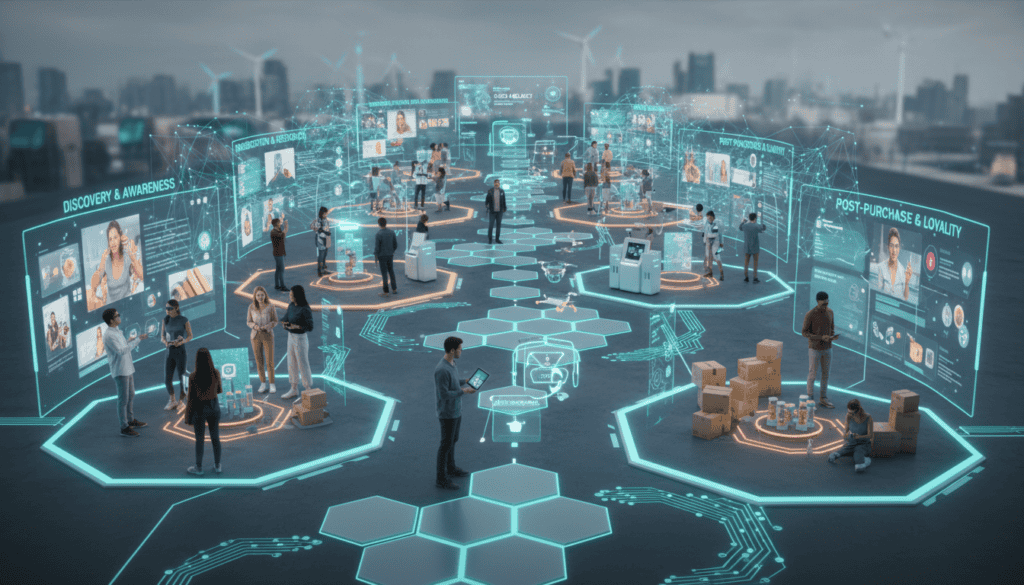
Understanding the contemporary CPG customer journey means recognizing it’s no longer a funnel—it’s a web of interconnected touchpoints that influence purchase decisions at every stage.
Stage 1: Passive Discovery
Most CPG purchases begin without the consumer actively looking for a solution. They’re scrolling through social media, watching videos, or reading content when they encounter a brand or product that catches their attention.
This stage is crucial because it sets the foundation for everything that follows. Brands that master passive discovery create mental availability—they become part of the consideration set before the consumer even realizes they need the product.
Key channels driving passive discovery:
- Social media algorithms that surface relevant content
- Influencer partnerships and user-generated content
- Contextual advertising in relevant digital environments
- In-store displays and point-of-purchase materials
Stage 2: Active Research
Once interest is sparked, consumers move into research mode. Here’s where it gets interesting—CPG research isn’t just about comparing prices anymore. Modern consumers dive deep into ingredient lists, brand values, sustainability practices, and peer reviews.
The research phase often happens across multiple sessions and devices. A consumer might start researching on their phone during a commute, continue on their laptop at home, and finish on their tablet while grocery shopping.
Primary research behaviors include:
- Reading ingredient lists and nutritional information
- Checking brand authenticity and company values
- Comparing prices across retailers
- Seeking peer reviews and recommendations
- Verifying sustainability claims and certifications
Stage 3: Evaluation and Comparison
The evaluation stage is where consumers narrow down their options. They’re not just comparing your product to direct competitors—they’re considering alternative solutions entirely. Someone researching protein bars might also consider protein powders, Greek yogurt, or even meal replacement shakes.
This stage is heavily influenced by personal values, past experiences, and social proof. Consumers create mental scorecards that weight different factors based on their individual priorities.
Stage 4: Purchase Decision
The actual purchase decision often happens quickly, but it’s informed by all previous touchpoints—which is why winning at point of purchase requires brands to connect digital research behaviors with in-store decision triggers. Interestingly, the purchase location might be completely different from where the research began. A consumer might discover a product on Instagram but purchase it at Target three weeks later.
Purchase decisions are increasingly influenced by:
- Availability and convenience
- Real-time promotions and discounts
- Last-minute social proof (reviews, ratings)
- In-the-moment mood and context

Digital Touchpoints That Drive CPG Sales
The digital landscape for CPG brands has exploded with opportunities, but it’s also created complexity. Success requires understanding which touchpoints matter most for your specific audience and product category.
Social Commerce Revolution
Social media platforms have evolved from discovery channels to complete shopping destinations. Instagram Shopping, TikTok Shop, and Pinterest Product Pins allow consumers to move from interest to purchase without leaving the platform.
This shift requires brands to optimize content for both engagement and conversion. The best-performing CPG brands create content that entertains, educates, and enables purchase simultaneously.
Search and Discovery Optimization
Search behavior for CPG products has become more sophisticated. Consumers don’t just search for product names—they search for solutions, benefits, and even ethical considerations.
Modern CPG search optimization includes:
- Solution-based keywords (“dairy-free milk alternatives”)
- Benefit-focused terms (“high-protein snacks for kids”)
- Values-driven searches (“sustainable cleaning products”)
- Local intent (“organic groceries near me”)
Personalization at Scale
Today’s consumers expect personalized experiences, even from CPG brands. This doesn’t mean every interaction needs to be individually customized, but brands must deliver relevant content based on preferences, behavior, and context.
Effective personalization strategies include:
- Segment-based email campaigns
- Dynamic website content based on visitor behavior
- Personalized product recommendations
- Location-based promotions and availability
The Role of Physical Retail in Digital Journeys
Despite the digital transformation, physical retail remains crucial in the CPG customer journey. However, its role has evolved significantly.
Stores as Discovery Channels
Physical stores now serve as discovery channels that extend digital experiences. Smart CPG brands design in-store experiences that encourage social sharing, creating a feedback loop that amplifies digital reach.
This might include Instagram-worthy displays, QR codes that link to exclusive content, or experiential elements that encourage customer engagement and sharing.
The Research-to-Purchase Bridge
Many consumers still prefer to see, touch, or try products before purchasing, especially for new brands or categories. However, they’re arriving at stores already informed about products they’ve researched online.
This creates an opportunity for brands to influence the final decision through strategic retail merchandising and in-store displays that reinforce digital messaging with clear, compelling point-of-purchase materials.
Measuring Success Across the Journey
Traditional CPG metrics like market share and brand awareness remain important, but they don’t tell the complete story of modern customer journeys. Brands need new measurement approaches that capture cross-channel behavior and long-term relationship building.
Journey-Based KPIs
Instead of measuring channels in isolation, successful CPG brands track metrics that reflect the complete customer journey:
- Touchpoint attribution: Understanding which combination of touchpoints drive conversions
- Time to purchase: Measuring how long consumers take from first awareness to purchase
- Cross-channel engagement: Tracking how consumers move between digital and physical touchpoints
- Lifetime value growth: Measuring relationship depth over time
The Importance of First-Party Data
With privacy regulations tightening and third-party cookies disappearing, CPG brands must build robust first-party data strategies. This means creating valuable exchanges where consumers willingly share information in return for personalized experiences or exclusive benefits.

Building Customer Journey Strategies for 2025
Creating effective CPG customer journey strategies requires balancing multiple considerations: channel integration, message consistency, timing optimization, and resource allocation.
Start with Customer Research
Before mapping touchpoints or choosing channels, invest time in understanding your specific customers. Generic buyer personas aren’t enough—you need detailed insights into how your audience discovers, researches, and purchases products in your category.
Effective research methods include:
- Customer interviews focused on recent purchase decisions
- Digital behavior analysis using analytics tools
- Social listening to understand organic conversations
- Purchase journey surveys
Design for Non-Linear Journeys
Accept that modern customer journeys aren’t linear. Consumers might enter your ecosystem at any point and move between touchpoints unpredictably. Your strategy should accommodate this reality by ensuring each touchpoint can serve multiple functions.
Optimize for Mobile-First Behavior
Mobile devices are the primary interface for CPG customer journeys. This means more than responsive design—it requires rethinking how you present information, structure interactions, and facilitate purchases for thumb-driven navigation.
Future Trends Shaping CPG Customer Journeys
Looking ahead, several CPG market trends shaping 2025 will continue reshaping how consumers discover and purchase packaged goods products.
AI-Powered Personalization
Artificial intelligence will make personalization more sophisticated and accessible for CPG brands. AI will help predict purchase intent, optimize timing for outreach, and customize experiences based on individual behavior patterns.
Voice and Visual Search
Voice assistants and visual search tools are changing how consumers discover and research products. CPG brands need to optimize for these new search behaviors, which often focus on attributes and benefits rather than brand names.
Sustainability Integration
Environmental consciousness isn’t a trend—it’s a permanent shift in consumer values. CPG brands must integrate sustainability messaging throughout the customer journey, not just as an afterthought.
Conclusion
The CPG customer journey in 2025 demands a sophisticated approach that balances digital innovation with human connection. Success requires understanding that today’s consumers don’t follow predetermined paths—they create unique journeys based on their individual needs, values, and circumstances.
The brands that thrive will be those that create flexible, integrated experiences across all touchpoints while maintaining authentic connections with their customers. This requires both strategic thinking and flawless execution across multiple channels and platforms.
Understanding these complex customer journeys is exactly why specialized CPG marketing agencies can make the difference between brands that simply exist and those that thrive in today’s marketplace. Our AI-enhanced campaigns and radical transparency approach help CPG brands create meaningful connections that convert browsers into loyal customers. Ready to transform your customer journey strategy? Let’s build something extraordinary together.