CPG brands spend 73% more on performance marketing than other industries, yet most struggle with broken attribution models that mask their true customer acquisition costs. The difference between profitable growth and burning through marketing budgets often comes down to three interconnected metrics that many brands measure incorrectly.

Understanding CPG Performance Marketing Fundamentals
Consumer packaged goods marketing operates in a unique ecosystem where purchase cycles, retail partnerships, and brand loyalty create complex attribution challenges. Unlike direct-to-consumer brands that can track a customer from first click to checkout, CPG companies must navigate multiple touchpoints across digital and physical retail environments. Understanding how these dynamics fit into a broader CPG marketing strategy and agency partnership framework is essential before optimizing individual performance channels.
The reality is that traditional marketing metrics often fail CPG brands because they don’t account for the nuanced customer journey that includes brand discovery, retailer research, in-store browsing, and eventual purchase. This complexity makes accurate measurement both more difficult and more essential for sustainable growth.
The CPG Attribution Challenge
Most CPG brands face what we call the “attribution gap” – the disconnect between digital marketing efforts and in-store purchases. Here’s what makes CPG attribution particularly challenging:
- Customers research online but purchase offline through retail partners
- Brand awareness campaigns influence purchases weeks or months later
- Multiple household members may research and purchase the same products
- Seasonal buying patterns create long attribution windows
- Retailer promotions can overshadow brand marketing efforts
Attribution Models That Actually Work for CPG Brands
The key to effective CPG attribution lies in choosing models that reflect real customer behavior rather than forcing CPG purchases into direct-response frameworks.
Multi-Touch Attribution with Extended Windows
CPG brands need attribution windows that extend far beyond the typical 7-30 day models used by e-commerce companies. Consider these approaches:
Brand Awareness Attribution: Use 90-180 day attribution windows for upper-funnel campaigns focused on brand building. Track metrics like branded search lift, social media engagement, and website visits from target demographics.
Product Education Attribution: Set 30-90 day windows for CPG content marketing and product demonstration campaigns. Monitor recipe downloads, how-to video completions, and product page engagement as conversion indicators.
Purchase Intent Attribution: Use 7-30 day windows for lower-funnel campaigns like retailer-specific promotions and coupon distributions. Track store locator usage, coupon downloads, and retailer click-throughs.
Probabilistic Attribution for Offline Purchases
When direct tracking isn’t possible, probabilistic models help bridge the digital-to-physical gap:
- Geo-fencing around retail locations to track store visits after digital exposure
- Panel-based purchase data to correlate digital touchpoints with buying behavior
- Survey attribution to directly ask customers about their discovery and research process
- Matched market testing to isolate campaign impact in specific geographic regions
Calculating True Customer Acquisition Cost (CAC) for CPG
Here’s what most CPG brands get wrong about CAC: they calculate it like a subscription business instead of accounting for repeat purchase patterns and lifetime customer relationships. Reviewing your CPG financial metrics and KPIs alongside CAC is the only way to build a complete picture of marketing efficiency.
The CPG CAC Formula
For CPG brands, CAC should reflect the cost to acquire a customer household that will make multiple purchases over time:
True CPG CAC = (Total Marketing Spend + Attribution Modeling Costs + Retail Partnership Costs) / New Customer Households Acquired
This formula accounts for:
- Paid media spend across all channels
- Content creation and influencer partnership costs
- Trade marketing and retail partnership investments
- Technology costs for attribution and measurement
Cohort-Based CAC Analysis
Track CAC performance by customer acquisition cohorts to understand how different marketing channels and campaigns perform over time. This might surprise you: the most expensive acquisition channels often deliver the highest lifetime value customers.
Break down your CAC analysis by:
- Acquisition channel (social, search, display, influencer, PR)
- Customer demographic (age, income, household size, location)
- Seasonal acquisition timing
- Product category or SKU first purchased

ROAS Optimization Strategies for CPG Performance Marketing
Return on ad spend optimization for CPG brands requires a more sophisticated approach than simple revenue-divided-by-spend calculations.
Blended ROAS vs. Channel-Specific ROAS
Most successful CPG brands track both blended ROAS (across all channels) and channel-specific ROAS, but they optimize for different goals:
Blended ROAS helps you understand overall marketing efficiency and guides budget allocation decisions. Target blended ROAS should account for your gross margins, customer lifetime value, and growth objectives.
Channel-Specific ROAS reveals which channels drive the most efficient conversions and which channels play important supporting roles in the customer journey.
Advanced ROAS Optimization Techniques
Incrementality Testing: Run holdout tests and matched market studies to measure the true incremental impact of your campaigns. Many CPG brands discover that their highest-ROAS campaigns are actually cannibalizing organic sales.
Media Mix Modeling: Use statistical modeling to understand how different marketing channels work together and optimize your budget allocation for maximum overall ROAS.
Creative Performance Analysis: Track ROAS by creative themes, formats, and messaging strategies. CPG brands often see dramatic ROAS improvements by optimizing creative performance rather than just targeting and bidding. Explore ad creative testing and iteration best practices for CPG to see how systematic creative development directly impacts your return on ad spend.
Advanced Measurement Strategies
Retail Media Attribution
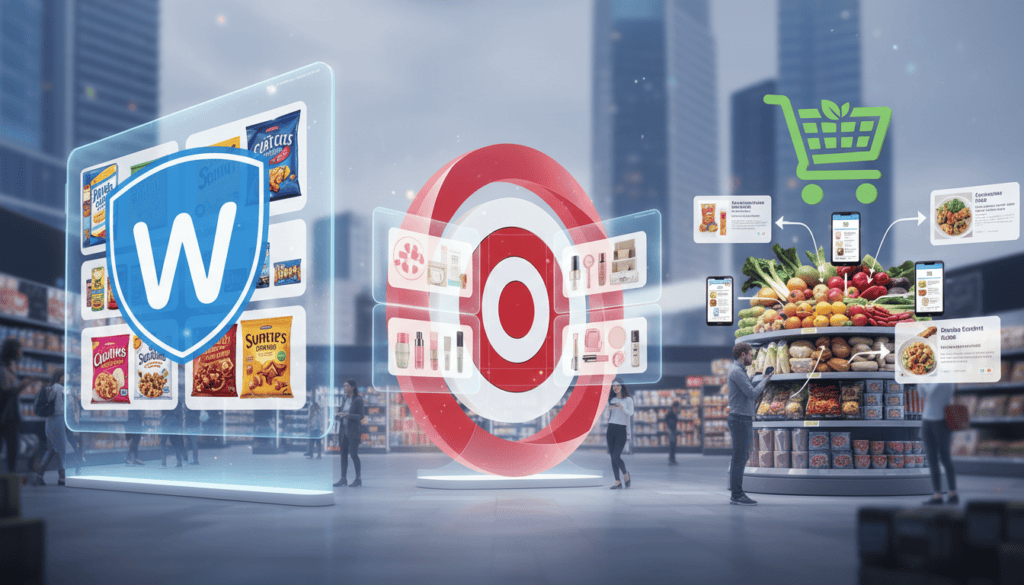
As retail media spending grows, CPG brands need attribution models that account for the unique dynamics of advertising on retailer platforms. Understanding how retail media networks like Walmart Connect, Target Roundel, and Instacart Ads structure their attribution reporting is critical to accurately measuring cross-platform performance:
- Cross-retailer attribution when customers research on one platform but purchase on another
- Halo effects where advertising one product drives sales of other SKUs
- Seasonality impacts that vary by retailer and product category
Brand Lift Measurement
Integrate brand lift studies into your performance marketing measurement to understand how performance campaigns impact brand health metrics:
- Aided and unaided brand awareness
- Purchase intent and consideration
- Brand perception and sentiment
- Competitive positioning
Technology Stack for CPG Attribution
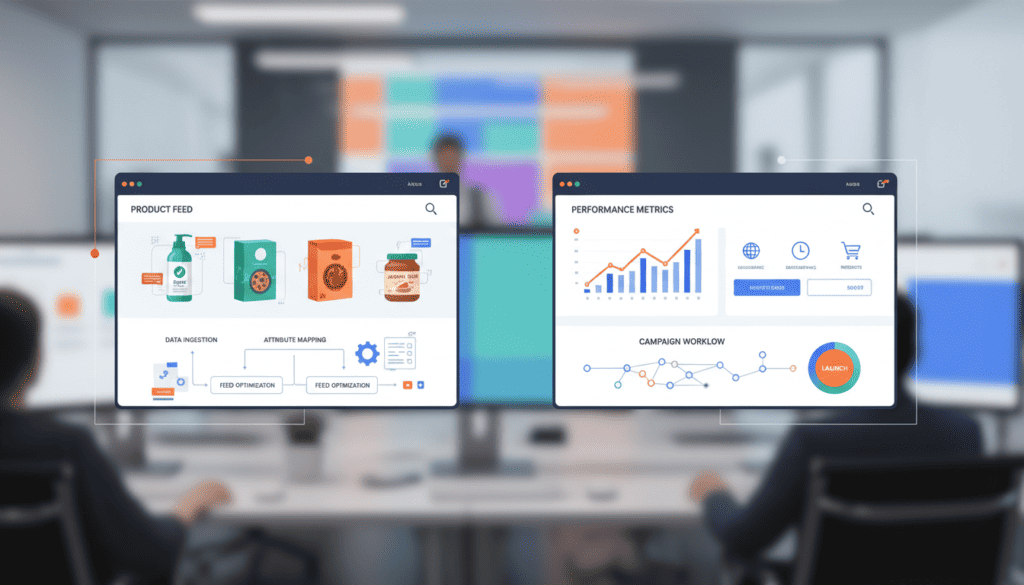
The right measurement technology can make or break your attribution accuracy. Here’s what works for CPG brands:
Essential Attribution Technologies
Customer Data Platforms (CDPs): Unify customer data from multiple touchpoints to create complete customer journey maps.
Marketing Mix Modeling Tools: Use statistical analysis to understand channel interactions and optimize budget allocation.
Retail Analytics Platforms: Connect retail sales data with marketing activities to measure true business impact. CPG data analytics platforms that turn retail insights into business decisions are increasingly essential for bridging this measurement gap.
Survey and Panel Data: Fill attribution gaps with consumer research and purchase panel insights.

Common CPG Attribution Mistakes to Avoid
Most CPG marketing teams make these critical errors that inflate ROAS and hide true CAC:
- Using last-click attribution for brand awareness campaigns
- Ignoring view-through conversions and assisted conversions
- Setting attribution windows that are too short for CPG purchase cycles
- Failing to account for cannibalization of organic sales
- Over-attributing success to easily trackable channels like search
- Not factoring in retail partnership costs when calculating CAC
Building Your CPG Attribution Strategy
Start with these foundational steps to improve your attribution accuracy:
- Audit your current attribution models: Identify gaps between your attribution and actual customer behavior
- Extend your attribution windows: Test longer attribution windows that reflect your customers’ actual purchase cycles
- Implement incrementality testing: Run holdout tests to measure true campaign impact
- Integrate offline data sources: Connect retail sales data, survey responses, and panel data to your marketing analytics
- Optimize for blended performance: Balance channel-specific efficiency with overall marketing effectiveness
The Future of CPG Performance Marketing
The measurement landscape continues to evolve with privacy changes, new retail media opportunities, and advanced attribution technologies. Successful CPG brands will be those that build flexible measurement frameworks that can adapt to these changes while maintaining focus on true business outcomes.
The reality is that perfect attribution may never exist for CPG brands, but directionally accurate measurement that guides better decision-making is achievable with the right strategy and technology investments.
Conclusion
CPG performance marketing success depends on measurement strategies that reflect the complex, multi-touchpoint customer journey unique to consumer packaged goods. By implementing attribution models with appropriate windows, calculating CAC that accounts for customer lifetime value,