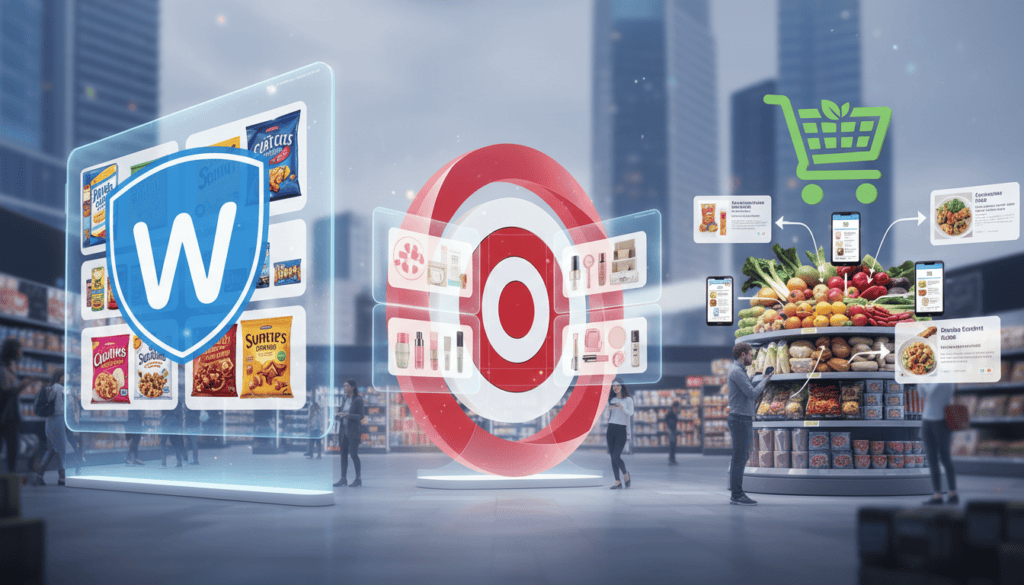
Retail media spending is projected to reach $100 billion by 2026, with CPG brands driving 70% of this growth. The three platforms leading this revolution—Walmart Connect, Target Roundel, and Instacart Ads—offer distinct advantages that can make or break your product’s visibility at the digital shelf. Here’s what separates winning campaigns from wasted budgets.

Why Retail Media Networks Matter for CPG Brands
The shift toward retail media represents more than just another advertising channel—it’s a fundamental change in how consumers discover and purchase products. Unlike traditional advertising that interrupts the customer journey, retail media meets shoppers exactly when they’re ready to buy.
Here’s the thing: when someone searches for “organic pasta sauce” on Walmart.com, they’re not browsing casually. They’re in purchase mode. This intent-driven environment creates conversion rates that traditional display advertising simply can’t match.
CPG brands are responding accordingly. Major players like Unilever, Procter & Gamble, and Coca-Cola have shifted significant portions of their media budgets to retail platforms, often seeing 3-5x higher return on ad spend compared to other digital channels.
Walmart Connect: The Retail Giant’s Advertising Powerhouse
Walmart Connect has evolved from a basic sponsored product platform into a sophisticated advertising ecosystem that rivals Amazon’s offering. The platform’s strength lies in its massive reach—Walmart.com attracts over 230 million monthly visitors, while Walmart stores serve 265 million customers weekly.
Key Features and Capabilities
- Sponsored Products: Your products appear in search results and category pages, exactly where shoppers are looking
- Display Advertising: Banner ads across Walmart’s digital properties, including homepage takeovers
- Video Ads: Engaging video content that showcases products in action
- Connected TV: Reach customers through Walmart’s partnership with streaming services
- In-Store Display: Digital screens throughout Walmart locations for omnichannel campaigns
What Makes Walmart Connect Unique
Walmart’s customer data advantage comes from both online and offline purchases. This creates remarketing opportunities you can’t find elsewhere. For example, you can target customers who bought your competitor’s product in-store with online ads for your brand.
The platform also offers closed-loop attribution, meaning you can track whether your digital ads drove actual sales, both online and in physical stores. This level of measurement precision helps optimize campaigns in real-time.
Best Practices for Walmart Connect
Start with sponsored products before expanding to display advertising. The data you gather from search campaigns will inform your broader strategy. Most businesses miss this foundational step and jump straight into expensive display campaigns without understanding their audience.
Focus on seasonal opportunities. Walmart’s customer base tends to be highly seasonal in their shopping patterns, with distinct spikes around back-to-school, holidays, and summer months. Plan your campaigns around these periods for maximum impact.
Target Roundel: Precision Targeting Meets Premium Brand Safety
Target Roundel positions itself as the premium option in retail media, reflecting Target’s brand positioning. The platform serves 50 million weekly store visitors and 18 million monthly digital users who tend to have higher household incomes than average retail shoppers.
Core Advertising Solutions
- Sponsored Products: Native ads within Target.com search results and product pages
- Display & Video: Rich media ads across Target’s digital ecosystem
- Audio Advertising: Ads on Target’s in-store radio network
- Connected TV & Streaming: Video ads through Target’s media partnerships
- Social Commerce: Integration with Target’s strong social media presence
Target’s Competitive Advantages
Target’s customer base skews younger and more affluent, making it ideal for premium CPG brands or new product launches. The average Target customer has a household income 20% higher than the general population, and 80% are women—a crucial demographic for many CPG categories.
The platform’s brand safety measures exceed industry standards. Your ads appear alongside Target’s carefully curated product selection, ensuring your brand maintains its premium positioning.
Optimizing Target Roundel Campaigns
Take advantage of Target’s strong mobile presence. Over 75% of Target’s digital traffic comes from mobile devices, so ensure your creative assets are mobile-optimized from the start.
Use Target’s Circle loyalty data strategically. The program has over 90 million members, providing rich behavioral data for targeting and retargeting campaigns. This might surprise you: Circle members spend 50% more than non-members, making them high-value targets for CPG brands.

Instacart Ads: Capturing the Grocery Delivery Revolution
Instacart’s advertising platform has grown alongside the grocery delivery boom, now serving 5.5 million orders weekly across 80,000+ retail locations. For CPG brands, this represents access to highly engaged grocery shoppers from multiple retailers through a single platform.
Instacart’s Advertising Options
- Sponsored Products: Featured placement in search results and category browsing
- Display Ads: Banner advertising throughout the shopping experience
- Brand Pages: Dedicated storefronts showcasing your complete product range
- Coupons & Promotions: Digital promotions that drive trial and repeat purchases
- Video Ads: Engaging content that demonstrates product benefits
Why Instacart Ads Work for CPG
The reality is that Instacart shoppers are premium customers. They have higher household incomes and are willing to pay for convenience. They also tend to be brand-conscious, making them ideal targets for premium CPG products.
Instacart’s real-time nature creates unique opportunities. When someone adds competing products to their cart, your sponsored product ads can appear immediately, creating last-minute consideration and switching opportunities.
Instacart Campaign Strategies
Focus on complementary product targeting. When someone adds pasta to their cart, that’s the perfect moment to show them your premium pasta sauce. This contextual targeting drives higher conversion rates than broader demographic targeting.
Use seasonal and weather-based campaigns effectively. Instacart orders spike during bad weather, holidays, and local events. Adjust your bidding and creative accordingly to capture these high-intent moments.
Comparing Platform Performance and ROI
Each platform serves different strategic purposes in your retail media mix. Here’s how they typically perform across key metrics:
Reach and Scale
Walmart Connect offers the broadest reach, serving diverse demographics across urban, suburban, and rural markets. Target Roundel provides access to affluent, younger shoppers primarily in suburban markets. Instacart delivers highly engaged grocery shoppers who value convenience over price.
Cost and Competition
Cost-per-click rates vary significantly by category, but general patterns emerge. Walmart typically offers the lowest CPCs due to less competition, while Target and Instacart command premium pricing that often delivers higher-quality traffic.
Attribution and Measurement
All three platforms provide closed-loop attribution, but with different strengths. Walmart excels at omnichannel measurement, Target offers superior demographic insights, and Instacart provides real-time behavioral data.
Building Your Multi-Platform Retail Media Strategy
Most successful CPG brands don’t choose one platform—they orchestrate campaigns across multiple networks to maximize reach and frequency while serving different customer segments.
Platform Selection Framework
Start by mapping your target customers to platform demographics. If you’re launching a premium organic product, Target and Instacart might be your primary focus. For mainstream products seeking maximum reach, Walmart Connect becomes essential.
Consider your product’s purchase frequency. High-frequency items like snacks and beverages benefit from Instacart’s immediate-need environment. Lower-frequency purchases might perform better on Walmart’s browse-heavy platform.
Budget Allocation Strategy
Begin with a 60/30/10 allocation across your primary platforms, then optimize based on performance data. Most brands find their ideal mix after 90 days of testing with sufficient budget across all channels.
Don’t spread budgets too thin initially. It’s better to fully test two platforms with adequate spend than to under-fund three campaigns and generate inconclusive results.

Measuring Success Across Retail Media Networks
Traditional marketing metrics don’t tell the complete story in retail media. You need to track both advertising performance and business impact to optimize effectively.
Key Performance Indicators
- Return on Ad Spend (ROAS): Direct revenue attribution from advertising
- Incremental Sales: Sales lift beyond organic performance
- Share of Voice: Your brand’s visibility compared to competitors
- Customer Acquisition Cost: Cost to acquire new customers through each platform
- Lifetime Value Impact: Long-term value of customers acquired through retail media
Advanced Attribution Modeling
Here’s what works: implement unified measurement across platforms using consistent UTM parameters and conversion tracking. This allows you to understand the customer journey across touchpoints and optimize accordingly.
Consider incrementality testing to understand true advertising impact. Some sales would have happened anyway—incrementality testing helps you identify and optimize for truly additive revenue.
Future Trends in CPG Retail Media
The retail media landscape continues evolving rapidly, with new capabilities launching quarterly across all major platforms. Understanding these trends helps you stay ahead of competition and maximize your investment.
Emerging Technologies
Artificial intelligence and machine learning are becoming standard features across platforms, enabling automated bidding, creative optimization, and audience targeting that adapts in real-time to performance data.
Voice commerce integration is expanding, particularly through Walmart’s partnership with Google Assistant and Target’s Alexa integration. These channels represent new advertising opportunities as voice shopping grows.
Privacy and Data Evolution
First-party data advantages continue strengthening as third-party cookies disappear. Retail media networks’ access to purchase data positions them well in the privacy-first advertising landscape.
This might surprise you: retail media platforms are becoming data clean rooms, allowing brands to activate their own customer data while maintaining privacy compliance.
Conclusion
Retail media networks represent the future of CPG marketing, offering unprecedented access to high-intent shoppers at the moment of purchase decision. Success requires understanding each platform’s unique strengths and building integrated campaigns that maximize reach while optimizing for performance.
The brands winning in this space aren’t just running ads—they’re building comprehensive retail media strategies that span multiple platforms and touchpoints. They’re using AI-enhanced campaigns to optimize performance in real-time and maintaining radical transparency in their measurement and attribution.
Ready to transform your CPG brand’s retail media performance? Beast Creative Agency’s certified specialists bring the experience and technology needed to maximize your investment across Walmart Connect, Target Roundel, and Instacart Ads. Our personalization-focused approach and transparent reporting ensure your campaigns drive measurable ROI from day one.